


Daikin Air Conditioners: SA Buying Guide
Daikin Air Conditioners: SA Buying Guide
Daikin air conditioners are a strong choice when you want premium comfort, quiet operation and efficient heating and cooling from one system. The best Daikin aircon, however, is not simply the most expensive one. It is the unit that matches your room size, usage pattern, installation layout and long-term running cost expectations.
This guide explains what makes Daikin air conditioners popular in South Africa, which features are worth looking at, and how to choose the right model for a bedroom, lounge, home office or light commercial space.
Why Buyers Choose Daikin Air Conditioners
Daikin has a long history in air conditioning and climate control, with roots going back to Japan in 1924. In South Africa, the brand is known for premium residential and light commercial air conditioning solutions, with a focus on comfort, energy efficiency, reliability and clean interior design.
For most buyers, Daikin sits in the premium part of the aircon market. That does not mean every home needs one. It means Daikin makes the most sense when the aircon will be used regularly, when noise matters, when comfort control is important, or when the unit will be installed in a visible space where build quality and appearance matter.
Daikin is often a good fit for:
- Main bedrooms where quiet operation matters
- Lounges and open-plan living areas
- Home offices used for long hours
- Premium apartments and townhouses
- Guest suites and short-term rental properties
- Boardrooms, reception areas and small offices
- Buyers who want a reliable long-term inverter aircon
The key is still correct sizing. A Daikin unit that is too small will struggle. A unit that is too large can short cycle and feel uncomfortable. Brand quality helps, but it does not replace proper BTU selection and professional installation.
Daikin as a Premium Aircon Brand
Daikin air conditioners are usually chosen for a combination of comfort, efficiency and long-term ownership value. The older source articles described Daikin as a premium option, and that is still the right positioning for the AC Direct range.
The premium appeal is not only about the name on the indoor unit. It is about the way the system is designed to run day after day. A good Daikin inverter unit can adjust output as the room reaches temperature, which helps avoid harsh temperature swings and unnecessary compressor cycling.
That steady operation is especially useful in South African homes where an aircon may be used for summer cooling, winter heating, humid coastal comfort and work-from-home temperature control.
If you are buying only for occasional use in a spare room, a more budget-focused brand may be enough. If the room is used every day, Daikin becomes easier to justify.
Cooling and Heating in One System
Many South African buyers still think of an aircon as a summer appliance only. Modern Daikin air conditioners are air-to-air heat pumps, which means selected units can cool in summer and heat in winter.
This makes Daikin useful in regions with seasonal temperature swings. A Johannesburg bedroom may need cooling in summer and heating on cold winter mornings. A Cape Town apartment may need cooling during summer heat and comfortable heating during damp winter evenings. A Durban home may focus more on summer cooling and humidity comfort.
A reverse-cycle aircon does not create heat in the same way as a basic electric resistance heater. It transfers heat, which is why inverter heat pump aircons are often more efficient for regular room heating than plug-in heaters. The result is a single installed system that can support comfort through more of the year.
Before buying, check whether the exact Daikin model you are considering supports both cooling and heating. Do not assume every aircon listed online has the same operating modes.
Energy Efficiency and R32 Refrigerant
Energy efficiency is one of Daikin’s main strengths. Selected Daikin inverter models offer strong seasonal efficiency ratings, while the use of R32 refrigerant in many current ranges helps reduce environmental impact compared with older R410A systems.
The important buyer takeaway is simple: an efficient Daikin aircon can help reduce wasted electricity when it is correctly sized, correctly installed and used sensibly. The label on the unit is only part of the story.
Electricity use still depends on:
- Room size and heat load
- Insulation and ceiling height
- Window size and sun exposure
- Set temperature
- How many hours the unit runs
- Whether the filters are clean
- Whether the outdoor unit has enough airflow
- Whether the unit is inverter or non-inverter
A premium inverter unit can still use more electricity than expected if it is installed in a hot west-facing room, set to 18°C all day, or run with dirty filters. Good buying decisions and good usage habits work together.
For most cooling situations, a set point around 24 to 26°C is usually a better balance of comfort and electricity control than forcing the room much colder.
Quiet Operation for Bedrooms and Living Areas
Noise is one of the reasons buyers consider Daikin over cheaper alternatives. Selected Daikin residential units are designed for low sound pressure levels, making them suitable for bedrooms, nurseries, studies, lounges and open-plan living areas.
Quiet operation matters because an aircon is not only used during the hottest hour of the day. Many people run it while sleeping, working, watching TV or hosting guests. A unit that is technically powerful but distracting can quickly become frustrating.
When comparing Daikin options, check the indoor sound level on the specific product listing or datasheet. Do not rely only on general brand reputation. Noise levels can vary between model ranges and BTU sizes.
Also remember that installation affects noise. A poorly mounted indoor unit, an outdoor unit with vibration, or pipework under strain can make a good aircon sound worse than it should.
Design and Interior Fit
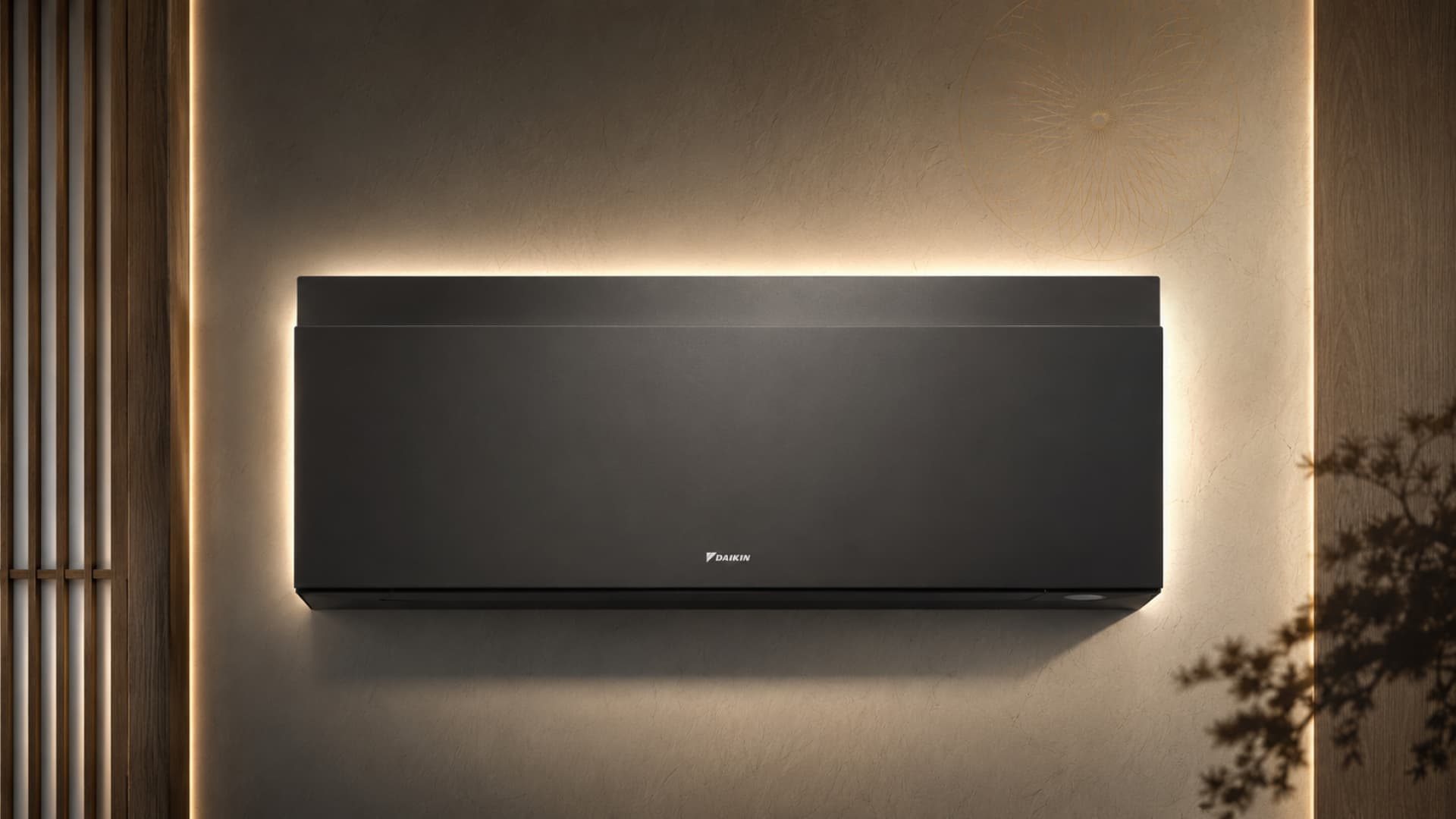
Daikin wall-split units are often chosen for clean, discreet styling. Several Daikin ranges use a simple flat front panel that blends into modern bedrooms, lounges and offices without making the indoor unit feel visually heavy.
Design may sound secondary, but it matters when the unit is going into a high-visibility room. A lounge, open-plan kitchen, boardroom or guest suite needs an aircon that looks intentional, not like an afterthought.
Before ordering, think about:
- Where the indoor unit will sit
- Whether it will be visible from the main seating area
- Whether the wall has enough space above doors, curtains or built-ins
- Whether the airflow can be aimed across the room instead of directly at people
- Whether the outdoor unit can be installed neatly and safely
A clean-looking indoor unit still needs practical placement. The best wall is not always the most hidden wall. It is the wall that gives the best airflow, drainage route, pipe run and service access.
Smart Control and Daily Convenience
Selected Daikin models support app-based control through Daikin’s connected control options, depending on the exact model and whether the controller is standard or optional.
Smart control can be useful if you want to:
- Switch the aircon on before arriving home
- Set schedules for bedrooms or offices
- Avoid leaving the unit running unnecessarily
- Adjust settings without finding the remote
- Manage comfort in a rental, office or guest suite
Wi-Fi or app control should not be the first buying decision, though. Size, efficiency, room fit and installation matter more. Treat smart control as a useful extra once the fundamentals are right.
Air Quality and Filtration
Daikin air conditioners can support better indoor comfort by filtering recirculated air, depending on the filter type included in the model. Filters help catch dust and particles before air passes through the indoor unit.
This is useful in South African homes where dust, pet hair, pollen, coastal humidity and seasonal dryness can all affect comfort. However, an aircon is not a full replacement for a dedicated air purifier unless the model is specifically designed for that purpose.
The practical rule is this: filtration helps, but maintenance makes it work. A dirty filter restricts airflow, reduces performance and can make the unit smell musty. Clean filters regularly and book professional servicing at least once a year, especially if the unit is used daily.
Which Daikin Aircon Is Best for Your Room?
The best Daikin aircon depends on the room first, not the model name.
| Room or use case | Good Daikin starting point | What to check |
|---|---|---|
| Small bedroom | Smaller wall-split inverter | Quiet operation, sleep comfort and correct BTU |
| Main bedroom | Inverter wall split | Noise level, heating mode and airflow direction |
| Lounge | Larger wall split or multi-split option | Room size, open-plan layout and sun exposure |
| Home office | Efficient wall split | Long-running comfort, noise and control options |
| Premium living space | Design-led Daikin range | Appearance, low noise and smart control |
| Small office or boardroom | Wall split, cassette or concealed option | Occupancy, equipment heat and airflow layout |
| Larger commercial space | Commercial Daikin solution | Site assessment, zoning and installation design |
For most homes, start with a wall-split inverter unit. For larger spaces, multiple rooms or offices, ask for proper sizing instead of choosing only from a product image.
How to Size a Daikin Aircon Correctly
BTU sizing is the foundation of the purchase. A premium brand cannot compensate for the wrong capacity.
As a broad starting point:
| Room size | Common starting size |
|---|---|
| Up to 15 m² | 9,000 BTU |
| 16 to 25 m² | 12,000 BTU |
| 26 to 35 m² | 18,000 BTU |
| 36 to 50 m² | 24,000 BTU |
| 51 m²+ | Larger unit, multiple units or assessment |
Adjust upward if the room has strong afternoon sun, large windows, poor roof insulation, high ceilings, open-plan access, many occupants or heat-producing equipment. You may stay closer to the lower side if the room is shaded, insulated and can be closed off while the aircon runs.
Use the BTU Calculator before comparing Daikin models.
Installation Matters with Daikin
Daikin air conditioners should be installed by qualified aircon installers. This protects performance, warranty handling and long-term reliability.
A proper installation considers:
- Indoor unit wall position
- Outdoor unit airflow clearance
- Drainage route
- Pipe run length
- Electrical isolator or power requirements
- Vibration control
- Service access
- Correct commissioning after installation
If the outdoor unit is boxed into a hot corner, the indoor unit blows directly onto a bed, or drainage is poorly routed, the aircon may disappoint even if the unit itself is excellent.
For placement guidance, read Where should you install an aircon?.
Maintenance and Warranty Considerations
Daikin aircons are built for long-term use, but they still need maintenance. Clean filters, clear drainage and unobstructed outdoor airflow all help the unit run efficiently.
A practical maintenance routine includes:
- Cleaning indoor filters during active use
- Keeping the outdoor unit clear of leaves and debris
- Checking for weak airflow or unusual smells
- Booking an annual professional service
- Keeping installation and service records
- Checking warranty terms on the specific product page
Warranty conditions can vary by product, installation and service history, so confirm the current AC Direct product page details before purchase. Do not assume one warranty applies to every Daikin unit.
Is Daikin Worth It?
Daikin is worth considering when you want premium comfort, quiet operation, good efficiency and a long-term aircon solution. It is not always the cheapest option, but it can be good value when installed in a room used regularly.
Choose Daikin if:
- The room is used daily
- You want quiet bedroom or office comfort
- Heating and cooling both matter
- You want a premium finish
- You value energy efficiency
- You want strong brand support
- You are fitting a higher-end home, office or rental space
Choose a more budget-focused alternative if the room is rarely used, upfront price is the only priority, or you need temporary cooling rather than a permanent installed system.
A Daikin aircon is a long-term purchase. Get the size right, install it properly and maintain it well, and it can deliver reliable comfort through South African summers and winters.
Internal Links
- Use the BTU Calculator
- What size aircon do I need?
- Inverter vs non-inverter aircons
- Where should you install an aircon?
- Aircon maintenance checklist
- Browse Daikin air conditioners
FAQ: Daikin Air Conditioners in South Africa
Are Daikin air conditioners good?
Yes, Daikin air conditioners are a strong premium choice for South African homes and offices when they are correctly sized and professionally installed. The brand is known for efficient climate control, quiet operation, clean design and reliable long-term comfort. As with any aircon, the final result depends on choosing the right BTU size and maintaining the unit properly.
What is the best Daikin aircon?
The best Daikin aircon is the one that matches your room size, usage pattern and installation layout. A small bedroom may need a quiet smaller wall split, while a lounge or open-plan area may need a larger inverter model. For offices or commercial spaces, a site assessment may be needed before choosing the system type.
Do Daikin aircons heat and cool?
Many Daikin air conditioners can provide both cooling and heating, but you should confirm the exact model before purchase. Reverse-cycle aircons work as air-to-air heat pumps, allowing one installed system to cool in summer and warm the room in winter. This makes them useful for South African homes that need year-round comfort.
Are Daikin air conditioners energy efficient?
Daikin air conditioners can be energy efficient, especially inverter models that are correctly sized and used sensibly. Running cost still depends on the room, insulation, set temperature, sunlight, maintenance and hours of use. For best results, choose the correct BTU size and avoid forcing the unit to run at very low cooling temperatures.
Are Daikin aircons quiet?
Selected Daikin residential aircons are designed for quiet operation, making them suitable for bedrooms, studies and lounges. The exact sound level depends on the model and capacity, so check the product listing or datasheet before buying. Good installation also matters because poor mounting can create vibration or unwanted noise.
What is R32 refrigerant in a Daikin aircon?
R32 is a modern refrigerant used in many current Daikin air conditioners. Compared with older R410A refrigerant, R32 has a lower global warming potential and can support efficient operation when used in systems designed for it. Buyers should still focus on the full unit specification, not refrigerant alone.
Help Article: How to Choose a Daikin Aircon
Short-form guide | 3 min read | Category: Product Help → Buying Guides
Choosing a Daikin aircon starts with the room, not the model name. Follow this process before ordering.
Step 1: Measure the room
Measure the length and width in metres, then calculate the square metres. Use this to estimate the BTU size you need.
Step 2: Check the heat load
Move up a size if the room has strong afternoon sun, high ceilings, poor insulation, large windows, many people or open-plan access to other rooms.
Step 3: Decide how often the unit will run
If the room is used daily, choose an inverter model where available. If the aircon is for a rarely used spare room, a lower-cost option may be enough.
Step 4: Check comfort features
For bedrooms and offices, prioritise low noise and good airflow control. For lounges and premium spaces, also consider the look of the indoor unit and whether smart control is useful.
Step 5: Plan installation
Confirm indoor position, outdoor unit placement, drainage, pipe run and power requirements before paying. A good installation is essential for performance and warranty support.
Related: Full Daikin aircon guide | Use the BTU Calculator | Browse Daikin air conditioners