


Where Should You Install an Aircon? The SA Positioning Guide
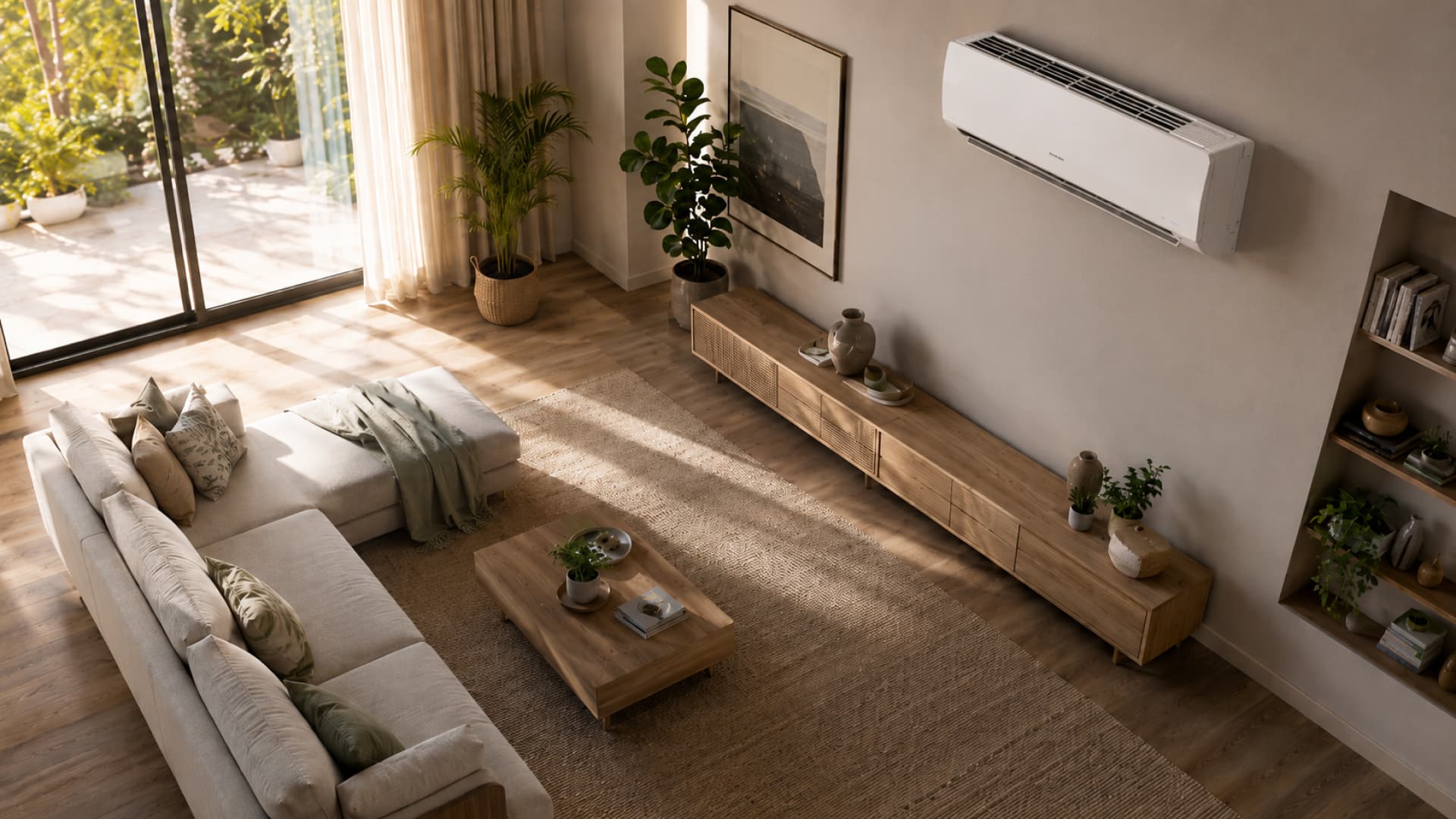
Where Should You Install an Aircon? The Complete South African Positioning Guide
Where you mount your aircon matters more than most people realise. A unit installed in the wrong position will cool or heat unevenly, run harder than it needs to, create uncomfortable draughts, and cost you more on your electricity bill. Get it right, and the same unit will be quieter, more efficient, and far more pleasant to live with.
This guide covers the best aircon placement for every room — bedroom, lounge, home office, and open-plan spaces — based on what we see working in South African homes every day.
Whether you're about to buy a new unit or you're reconsidering where your existing aircon sits, the principles here apply to all modern wall-split inverter units — Samsung, LG, Midea, Daikin, Hisense, Alliance, and others.
The Four Rules of Good Aircon Positioning
Before getting room-specific, these four principles apply everywhere:
- No direct airflow onto people. Cold air at 6–10°C blowing directly onto a sleeping or seated person causes discomfort, muscle stiffness, and disrupted sleep. Position the unit so airflow travels across the room, not straight down onto where people sit or sleep.
- Height matters. Hot air rises, cold air falls. Install the indoor unit high on the wall (typically 20–30 cm from the ceiling) so cooling air drops down gradually and heating air circulates naturally from the top of the room.
- Give the outdoor unit room to breathe. The condenser needs at least 30 cm of clearance on the sides and 60 cm above. Block it with a wall, shrubs, or shade cloth and efficiency drops significantly.
- Minimise pipe run length. The shorter the distance between indoor and outdoor unit, the less refrigerant line is exposed and the less efficiency is lost. Avoid routing pipes through multiple walls where possible.
Aircon Placement in the Bedroom
Bedroom aircon placement generates the most questions — and the most problems when it's done wrong. Here are the four positions available in a typical bedroom, and what you need to know about each.
Position 1: Directly Above the Bed (Not Recommended)
This is the most common installation mistake we see. Mounting the unit in the centre of the ceiling-adjacent wall, directly above the head of the bed, creates several problems:
- In cooling mode, air blows down at 6–10°C directly onto the person's face and chest.
- In heating mode, the unit diffuses hot air downward during active cycles — and a cool draught during the short rest cycles between compressor runs.
- Even with louvre adjustment, airflow consistently tracks back toward the closest heat source in the room — which is you.
Verdict: Avoid if any other wall is available.
Position 2: Opposite the Bed
The wall directly facing the foot of the bed is better than above the head, but still problematic in cooling mode — the aircon will blow cold air straight toward the bed across the room.
- Cold air at this distance will have warmed somewhat, which helps.
- Louvre direction can be adjusted to deflect airflow left or right of the bed — this largely solves the draught problem.
- Works well for heating, since warm air rises and distributes evenly before reaching the bed.
Verdict: Acceptable with careful louvre adjustment. Not ideal for light sleepers sensitive to airflow.
Position 3: Left or Right Side Wall (Recommended)
This is the position most AC Direct technicians recommend for bedroom installations. Mounting the unit on one of the side walls — to the left or right of the bed, at ceiling height — means:
- Cold air is directed across the width of the room, perpendicular to the bed, before circulating back.
- No direct airflow onto sleeping occupants.
- Even temperature distribution throughout the room.
- In heating mode, warm air rises to the ceiling and distributes uniformly downward.
Verdict: Best option in most bedroom layouts. Prioritise the side wall that minimises pipe run to the exterior.
Position 4: At the Foot of the Bed
A good second choice if side walls are not available. The foot-of-bed position allows the louvre to direct airflow left or right — missing the occupants entirely while still cooling or heating the room effectively.
- Slightly less draught risk than directly opposite.
- Good for narrow rooms where only one wall is practical.
- Ensure enough clearance — at least 60 cm — between the unit and the footboard.
Verdict: Good alternative to the side wall. Works well in most room shapes.
Aircon Placement in the Lounge
Lounge installations have more flexibility than bedrooms because people move around and aren't sleeping directly below the unit. That said, a few rules still apply:
- Avoid positioning above a sofa or seating area. Direct downward airflow onto people sitting stationary for extended periods causes the same draught problems as a bedroom.
- Install on the longest wall where possible. This maximises air distribution across the full room.
- In open-plan spaces, position toward the kitchen or dining side. Cool air will flow back toward the lounge seating naturally.
- Central placement on the long wall is ideal. Allows the unit to circulate air to both ends of the room.
- Keep clear of TV positions. Dripping condensation from an indoor unit installed above a flat-screen is a real and expensive problem. Maintain at least 60 cm horizontal clearance.
Aircon Placement in a Home Office
Home offices add a specific concern: direct airflow onto screens (condensation, cooling effect) and onto the seated person (discomfort during long work sessions).
- Side wall, away from the desk, is the clear preference. Air circulates across the room without blowing directly onto a seated person or screen.
- If only one wall is available, use the louvre carefully. Most modern inverter units have adjustable, auto-sweep louvres — set these to deflect airflow away from the desk.
- Avoid placing the outdoor unit directly outside the office window. The condenser is not loud, but on quiet calls or recordings, it's noticeable.
Outdoor Unit Placement
The outdoor unit (condenser) is often an afterthought — but its position directly affects how hard your aircon has to work.
| DO | AVOID |
|---|---|
| Place in shade where natural shade exists | Direct west-facing afternoon sun exposure |
| Allow 60 cm clearance above, 30 cm on sides | Enclosed brackets, boxes, or shade cages |
| Keep level and stable (concrete pad or brackets) | Installing directly on grass or soft ground |
| Minimise pipe run from indoor unit | Routing pipes through multiple load-bearing walls |
| Ensure drainage runs away from walls and foundations | Positioning so condensate pools against a wall |
One note on coastal and Highveld homes: coastal salt air accelerates fin corrosion on the condenser. If you're within 5 km of the ocean, specify a unit with corrosion-resistant coating — most manufacturers offer this as a factory option. On the Highveld, the primary enemy is dust accumulation on condenser fins during dry winter months. An annual clean before summer — preferably by a technician with a low-pressure coil cleaner — is the single best maintenance step you can take.
Common Installation Mistakes (And How to Avoid Them)
- Installing directly above a door or window. Heat gain from the door/window works against the unit. Also increases the risk of dripping onto door frames.
- Positioning the indoor unit too low on the wall. The ideal height is 20–30 cm from the ceiling. Lower than this and the unit cannot circulate air effectively, leaving warm pockets at ceiling level.
- Ignoring the pipe run. Every additional metre of refrigerant pipe adds installation cost and creates a slight efficiency loss. Ask your installer about the optimal wall for minimising the run before finalising placement.
- Placing the outdoor unit on a balcony floor with no drainage provision. Condensate water will pool and damage the floor surface or deck. Ensure a slope and a clear drainage path from day one.
- Installing in a corner. Air distribution is poor from corners. Central wall placement is almost always better.
Before You Book an Installation
When you book an AC Direct installation, our team will confirm the optimal position for both indoor and outdoor units during the pre-installation assessment. Bring the following to that conversation:
- Your floor plan or a rough sketch showing doors, windows, and furniture positions
- Where you typically sit or sleep in the room
- Any aesthetic preferences (unit on a specific wall, pipe routing preference)
- Access constraints on the exterior (boundary walls, paving, garden features)
Getting placement right before the first hole is drilled is significantly easier than moving a unit after installation.
Browse our full aircon range or book a professional installation and our team will guide you on the best position for your space.
Part B — Help Article
Slug: /articles/best-aircon-position-bedroom/ Title: Best Position for an Aircon in a Bedroom Category: Product Help / Installation Reading time: 2 min
Best Position for an Aircon in a Bedroom
The best position for an aircon in a bedroom is on a side wall — to the left or right of the bed — at ceiling height. This directs airflow across the room rather than straight down onto sleeping occupants.
Why not above the bed?
Mounting directly above the bed sends cold air (which can exit the unit at 6–10°C) straight down onto your face and chest. In heating mode, the unit creates an uncomfortable draught during rest cycles. Avoid this position if any other wall is available.
Your options, ranked
| Position | Best for | Watch out for |
|---|---|---|
| Side wall (left or right) | Most rooms — best airflow distribution | Pipe run length to exterior |
| Foot of bed | Narrow rooms with limited side wall | Ensure clearance from footboard |
| Opposite the bed | Acceptable with louvre adjustment | Airflow direction must be set away from bed |
| Above the bed | Avoid | Direct airflow onto face — discomfort, disrupted sleep |
Tips for any bedroom position
- Set the unit height at 20–30 cm from the ceiling for best air distribution.
- Use the auto-sweep louvre to move air away from the sleeping area.
- Set the sleep timer to raise temperature slightly after 2 hours — most inverter units have this function.
For a full room-by-room breakdown, read the AC Direct Aircon Positioning Guide.
Part C — FAQ Block (FAQPage schema)
Derived from top GSC queries. Embed as FAQPage schema on the blog.
Q1: What is the best position for an aircon in a bedroom?
The best position is on a side wall — to the left or right of the bed — at ceiling height. This directs airflow across the room perpendicular to where you sleep, avoiding direct cold or warm air on your face and body. It also gives the unit the best air distribution path across the full room.
Q2: Where should I place an aircon in a bedroom to avoid draughts?
Mount the unit on a side wall or at the foot of the bed, and set the louvre to direct airflow away from the bed. The 'above the bed' position is the most common cause of sleep-disrupting draughts, because cold air from the unit drops directly onto occupants. A side wall installation largely eliminates this problem without any louvre adjustment needed.
Q3: Does aircon position affect electricity consumption?
Yes, indirectly. A unit positioned above a door or window has to work against constant heat gain from outside, increasing runtime and electricity use. A poorly placed outdoor unit — in direct afternoon sun or enclosed without airflow clearance — runs hotter and draws more power. Correct placement of both the indoor and outdoor unit keeps your system operating at its rated efficiency.