


Aircon Maintenance Checklist: What to Do Every Month, Season, and Year
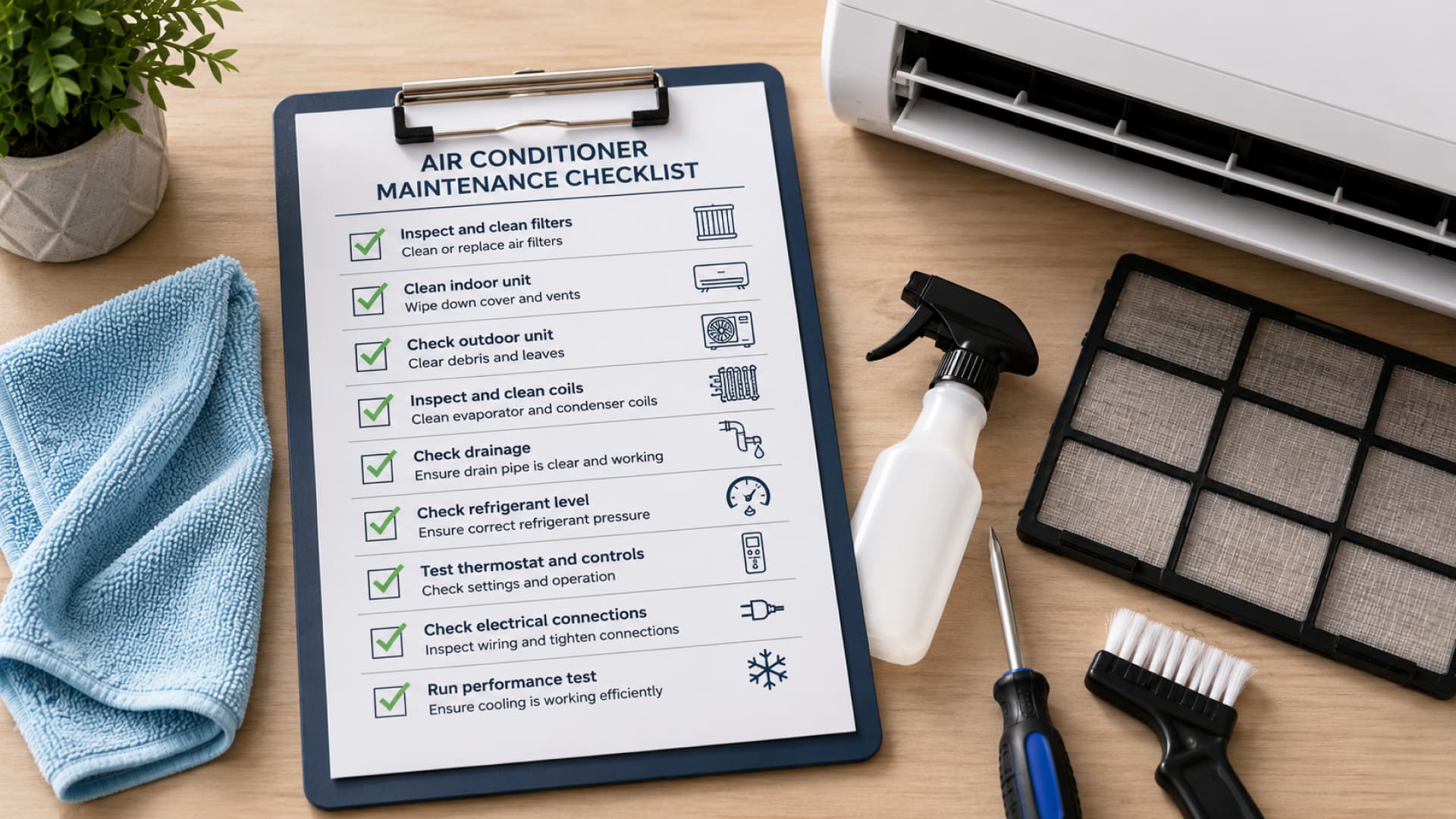
Aircon Maintenance Checklist: What to Do Every Month, Season, and Year
A well-maintained aircon will last 15 years or more. A neglected one will decline after 5–7: noisier, less efficient, more prone to faults, and more expensive to run. The difference between the two is almost entirely maintenance — and most of it takes less than 10 minutes a month.
This checklist sets out exactly what to do, how often, and whether it's a task you can handle yourself or one that needs a qualified technician. It applies to all wall-split inverter units commonly used in South African homes and offices — Samsung, LG, Midea, Daikin, Hisense, Alliance, and others.
Why Regular Aircon Maintenance Matters
- Efficiency: Dirty filters and coils reduce heat exchange capacity, forcing the unit to run longer to achieve the same temperature. HVAC industry estimates put efficiency loss from blocked filters at up to 15% and from dirty coils at up to 30%.
- Lifespan: Dust on the evaporator coil, low refrigerant, worn fan bearings, and blocked drain lines are the most common causes of premature unit failure. All are preventable with routine maintenance.
- Air quality: The filter catches dust, pollen, and airborne particles. A blocked filter isn't just inefficient — it starts re-circulating what it can no longer trap.
- Warranty: AC Direct's service plan extends the compressor warranty to 10 years and parts warranty to 3 years, provided the unit is serviced annually by an accredited installer.
Monthly Tasks (DIY — 10 Minutes)
These tasks require no tools and no technical knowledge. Do them once a month during periods of regular use.
1. Clean the Indoor Unit Air Filters
This is the single most impactful maintenance task you can do yourself.
- Switch the unit off and unplug at the wall socket.
- Open the front panel of the indoor unit (usually clips or a hinge — check your model's manual for the exact mechanism).
- Remove the filter panels.
- Wash in warm water with a small amount of dish soap. Rinse thoroughly.
- Allow to dry completely before reinstalling. Never reinstall a wet filter.
- Reinstall and close the panel.
Frequency: Every 2 weeks in high-use periods (summer, daily cooling). Every 4–6 weeks in moderate use. Every 2–3 weeks in high-dust environments (near construction, unpaved roads, Highveld dry season).
What to look for: Visible grey or brown dust accumulation, unusual smell when first switching on, reduced airflow from the indoor unit.
2. Check the Outdoor Unit (Condenser)
Walk around the outdoor unit and check:
- No vegetation, leaves, or debris blocking the intake grilles or coil fins
- No objects stored against the unit (at least 30 cm clearance on sides, 60 cm above)
- No visible damage to the casing, fins, or refrigerant line insulation
- Condensate drain line clear and draining away from the wall
This check takes two minutes. Do it more frequently during autumn when leaves fall.
3. Check for Unusual Sounds or Performance Changes
- Rattling or vibration: often a loose panel screw, debris in the outdoor unit, or a worn fan bearing
- Reduced cooling or heating: may indicate a dirty coil, low refrigerant, or blocked airflow
- Water dripping inside: indicates a blocked condensate drain line — needs attention promptly
- Mouldy or musty smell: indicates biological growth on the evaporator coil — requires a professional coil clean
Seasonal Tasks (Before Summer and Before Winter)
Do these at the start of each season when the unit's workload increases.
Before Summer (October–November)
- Run a full cooling test. Switch the unit to cooling mode and run it for 30 minutes. Check that it reaches set temperature, that airflow feels strong, and that there are no unusual sounds.
- Clean the outdoor unit coil. Use a garden hose on low pressure to rinse dust and debris from the condenser fins, top to bottom. Do not use a pressure washer — it bends the fins.
- Check the condensate drain. Pour a small amount of water into the drain pan (accessible from the indoor unit) and confirm it drains freely. A blocked drain pan overflows into the ceiling or wall.
- Inspect refrigerant line insulation. The insulation around the refrigerant pipes (the copper lines running from indoor to outdoor unit) degrades over time, especially on south-facing walls with sun exposure. Cracked or missing insulation reduces efficiency.
Before Winter (May–June)
- Run a full heating test. Switch to heating mode and confirm the unit produces warm air and reaches set temperature. If it doesn't heat effectively, this is the most common indicator of low refrigerant.
- Clean filters again. End of summer filters carry the most dust of the year.
- Check outdoor unit drainage for winter rain. Make sure condensate drainage path is clear before winter rains add water to the mix.
Annual Professional Service
Once a year, a qualified technician should perform a full service. This covers tasks that are either unsafe or technically complex for a homeowner:
| Task | Why it needs a technician |
|---|---|
| Refrigerant check and top-up | Requires certified handling. Low refrigerant = reduced capacity and compressor damage. |
| Evaporator coil clean (indoor) | Requires the unit to be partially disassembled. Chemical coil cleaner used inside the casing. |
| Condenser coil deep clean | Professional low-pressure wash removes scale and biological build-up not removed by a garden hose. |
| Electrical connection check | Loose connections cause arcing, nuisance tripping, and compressor damage. |
| Fan motor and bearing inspection | Worn fan bearings increase noise, vibration, and eventually cause motor failure. |
| Drain pan and line flush | Biological growth in drain lines is common in humid climates (Durban, East London). |
| Thermostat and controls check | Sensor calibration drift causes incorrect temperature control. |
When to book: Before the summer cooling season (September–October) is the best time. Technician availability is highest, and the unit is serviced before it goes into peak load.
Book an annual service with AC Direct and keep your warranty valid.
Quick Maintenance Reference
| Task | Frequency | DIY or Technician? |
|---|---|---|
| Clean air filters | Every 2–6 weeks | DIY |
| Check outdoor unit clearance | Monthly | DIY |
| Rinse outdoor coil | Before summer | DIY (garden hose, low pressure) |
| Check condensate drain | Seasonally | DIY |
| Inspect pipe insulation | Annually | DIY (report damage to technician) |
| Refrigerant check | Annually | Technician only |
| Evaporator coil clean | Annually | Technician only |
| Electrical connections check | Annually | Technician only |
| Full professional service | Once a year | Technician — book September/October |
For brand-specific Samsung maintenance steps, read the Samsung Aircon Maintenance Guide.
South African Conditions: Regional Maintenance Notes
- Gauteng (Highveld): Dry winters with heavy dust accumulation. Outdoor coil cleaning is especially important before summer. Check filter every 2–3 weeks during winter months when dust is highest.
- KwaZulu-Natal (coastal, humid): Condensate drain lines are more prone to biological growth. Request a drain pan treatment during the annual service. Salt air accelerates fin corrosion — use corrosion-resistant models or apply a fin coating.
- Western Cape: Generally lower humidity. Standard maintenance intervals apply. Watch for outdoor unit flooding in winter storm events — ensure drainage is clear.
- Within 5 km of the coast (anywhere): Salt air accelerates corrosion of outdoor unit fins. Annual coil rinse is essential. Consider specifying a marine-grade unit with anti-corrosion fin coating.
Part B — Help Article
Slug: /articles/how-to-clean-aircon-filters/ Title: How to Clean Your Aircon Filters (Step by Step) Category: Product Help / Maintenance Reading time: 2 min
How to Clean Your Aircon Filters (Step by Step)
Cleaning your aircon filters is the most effective maintenance task you can do yourself. It takes about 10 minutes and should be done every 2–6 weeks during regular use.
What you need
- Warm water
- Mild dish soap
- Soft brush or cloth
- A clean towel or drying space
Steps
- Turn the unit off and unplug at the wall socket.
- Open the front panel of the indoor unit. It usually clips open from the bottom or hinges upward.
- Slide out the filter panels (most units have two, one on each side).
- Wash in warm water with a small amount of dish soap. Use a soft brush or cloth for stubborn dust. Do not scrub the filter mesh hard — it can stretch or tear.
- Rinse thoroughly under running water until the water runs clear.
- Allow to dry completely before reinstalling. Lay flat or hang — do not reinstall while wet. A wet filter can cause mould growth on the coil.
- Reinstall and close the panel.
Signs your filters need cleaning
- Reduced airflow from the indoor unit
- Unit takes longer to reach set temperature
- Musty smell when first switched on
- Filter visibly grey or brown with dust
For the full seasonal and annual maintenance schedule, read the Aircon Maintenance Checklist.
Part C — FAQ Block — 8 pairs (FAQPage schema)
Q1: How often should I service my aircon?
A professional service once a year is the minimum recommendation. The best time is before the summer cooling season — September or October in South Africa. Between professional services, clean your air filters every 2–6 weeks depending on use and dust levels, and do a monthly visual check of the outdoor unit.
Q2: What does aircon maintenance include?
A full aircon service covers filter cleaning, evaporator and condenser coil cleaning, refrigerant level check, electrical connection inspection, condensate drain flush, fan motor and bearing inspection, and thermostat calibration check. DIY maintenance covers filter cleaning and outdoor unit checks. Everything else requires a qualified technician.
Q3: Can I service my aircon myself?
You can safely do filter cleaning, outdoor unit visual checks, and a low-pressure rinse of the condenser coil with a garden hose. Refrigerant handling, coil chemical cleaning, and electrical work require a qualified HVAC technician. Attempting refrigerant work yourself is illegal without certification and can cause serious damage to the unit.
Q4: How do I know if my aircon needs a service?
Signs include: reduced cooling or heating output, longer time to reach set temperature, unusual sounds (rattling, vibrating, grinding), water dripping inside from the indoor unit, musty or mouldy smell, and higher electricity bills without a change in usage pattern. Any of these indicates a service is overdue.
Q5: How often should I clean my aircon filter?
Every 2–6 weeks during regular use. Clean every 2 weeks if the unit runs daily in a high-dust environment (near construction, high-traffic area, unpaved roads, or during Gauteng's dry winter season). Every 4–6 weeks is adequate for moderate use in a low-dust, air-conditioned home. Always clean before the start of summer if the unit has been off for winter.
Q6: What happens if I don't service my aircon?
Efficiency drops as coils become dirty and filters block, increasing electricity consumption. Refrigerant leaks go undetected, eventually damaging the compressor. Biological growth (mould, bacteria) builds up in the drain pan and on the evaporator coil, affecting air quality. Fan bearings wear out earlier, leading to motor failure. A unit that could last 15 years with maintenance may fail at 6–8 years without it.
Q7: How much does an aircon service cost in South Africa?
A standard residential aircon service (one indoor unit, one outdoor unit) typically ranges from R600 to R1,200 depending on the unit size, location, and what the technician finds. Additional work such as refrigerant top-up, chemical coil clean, or drain line unblocking is charged separately. Contact AC Direct for a current quote specific to your unit and location.
Q8: Does AC Direct offer aircon servicing?
Yes. AC Direct's accredited installation and service team covers major centres across South Africa. Annual servicing through AC Direct's accredited installers also qualifies for the extended warranty benefit — 10 years on the compressor and 3 years on all other parts. Book a service online.