


How to Buy the Right Aircon for Your Budget
How to Buy the Right Aircon for Your Budget
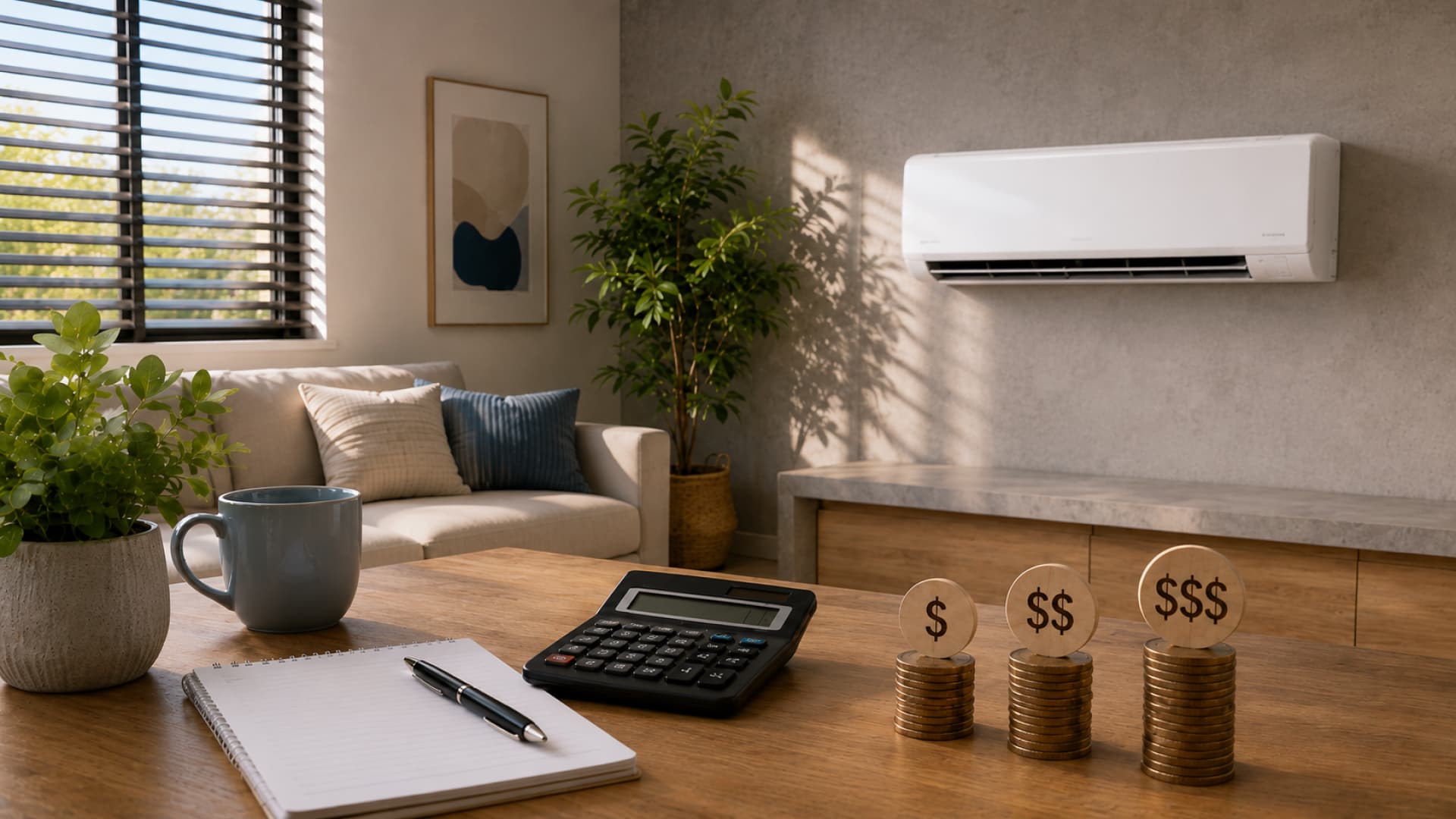
The cheapest aircon is not always the best-value aircon. If it is too small, inefficient, noisy, expensive to install, or poorly matched to your room, the saving disappears quickly.
This guide explains how to choose an aircon that fits your budget properly. It covers room size, aircon type, inverter vs non-inverter models, installation, electricity use, maintenance, and which features are worth paying for in a South African home or office.
Start with the Real Budget, Not Just the Unit Price
When people compare aircons, they often start with the sticker price. That matters, but it is only one part of the cost.
Your real aircon budget includes:
- The unit price
- Professional installation
- Any extra piping, brackets, electrical work, or access equipment
- Monthly electricity use
- Annual servicing
- Possible repairs later in the unit’s lifespan
A lower-priced unit can still be a good buy if it is correctly sized, professionally installed, and used in the right room. The problem starts when a buyer chooses only by price and ignores the total cost of ownership.
For example, a small non-inverter unit may be fine for a guest bedroom used occasionally. The same decision would be poor value in a main bedroom, lounge, or office used for hours every day. In those spaces, paying more upfront for an inverter model can reduce running costs and improve comfort over time.
The aim is not to buy the most expensive aircon. The aim is to avoid buying the wrong one.
Step 1: Choose the Correct Size First
Aircon sizing is where many budget mistakes start. A unit that is too small will run constantly and struggle to cool the room. A unit that is too large can short cycle, create draughts, and waste electricity.
Use BTU as your starting point. BTU measures cooling capacity, which tells you what size room the aircon can realistically handle.
| Room size | Common starting size | Typical use |
|---|---|---|
| Up to 15 m² | 9,000 BTU | Small bedroom or study |
| 16 to 25 m² | 12,000 BTU | Medium bedroom, home office, small lounge |
| 26 to 35 m² | 18,000 BTU | Large bedroom, medium lounge, boardroom |
| 36 to 50 m² | 24,000 BTU | Large lounge or open-plan area |
| 51 m²+ | 30,000 BTU+ or multiple units | Large open-plan or commercial space |
This table is a starting guide only. You may need to adjust up if the room has strong afternoon sun, poor insulation, high ceilings, large windows, more regular occupants, heat-producing electronics or appliances, or open-plan access to other rooms. You may stay on the lower side if the room is shaded, insulated, and can be closed off while the aircon runs.
Before comparing models, use the BTU Calculator or confirm the room size with AC Direct. Choosing the right BTU can save more money than choosing the cheapest unit.
Step 2: Match the Aircon Type to Your Budget
Different aircon types suit different budgets and spaces. The right choice depends on whether you own or rent, how often the room is used, whether permanent installation is possible, and how much cooling or heating you need.
| Aircon type | Budget fit | Best for | Watch out for |
|---|---|---|---|
| Portable aircon | Lower upfront cost | Rentals, temporary cooling, small rooms | Less efficient than wall-splits, needs exhaust hose |
| Window-wall aircon | Entry-level fixed installation | Smaller rooms where window/wall fitment works | Fewer modern design and feature options |
| Wall-split aircon | Best all-round value | Bedrooms, lounges, offices | Needs professional installation |
| Ceiling cassette | Mid to higher budget | Offices, shops, larger rooms | Ceiling space and installation complexity |
| Under-ceiling unit | Mid to higher budget | Larger open areas and commercial spaces | More visible than ducted systems |
| Ducted aircon | Higher budget | Multiple rooms or premium commercial spaces | Higher design and installation cost |
For most South African homes, a wall-split inverter aircon is the best balance of price, efficiency, comfort, and long-term value. Portable units are useful where installation is not possible, but they are usually not the most efficient solution for daily use.
For commercial spaces, the lowest-cost residential option is rarely the right answer. Offices, retail spaces, warehouses, and factories need proper capacity planning, airflow planning, and installation design.
Step 3: Decide Whether Inverter Is Worth It
Inverter aircons cost more upfront than basic non-inverter models, but they are usually the better value if you use the room regularly.
A non-inverter aircon switches the compressor fully on and off to control temperature. An inverter aircon adjusts compressor speed gradually, so it can run at lower output once the room is comfortable. That usually means steadier temperature control, quieter operation, and lower electricity use during longer run times.
| Use case | Better budget choice |
|---|---|
| Guest room used occasionally | Non-inverter or entry-level inverter may be enough |
| Main bedroom used every night | Inverter wall-split |
| Lounge used daily | Inverter wall-split |
| Home office | Inverter wall-split for comfort and noise control |
| Shop, clinic, office or boardroom | Inverter commercial system |
| Short-term rental or no installation allowed | Portable aircon |
If you only use the aircon a few times a month, the payback on inverter technology may be slower. If you use it for several hours a day, inverter technology is usually worth the extra spend.
For a full technical comparison, read Inverter vs non-inverter aircons: which is right for you?.
Step 4: Think in Budget Tiers
Instead of asking, “What is the cheapest aircon?”, it is better to ask, “What is the best aircon in my budget tier?”
Entry budget: occasional cooling
This tier is for small rooms, rentals, temporary cooling, or spaces where the aircon will not run every day. Portable aircons, window-wall units, and smaller wall-split units usually sit here.
This can be the right choice if you need basic cooling without paying for premium smart features. The trade-off is usually noise, running efficiency, design, or long-term comfort.
Practical everyday budget: best value for most homes
This is where most buyers should focus. A correctly sized inverter wall-split from a reputable brand gives you heating and cooling, better electricity efficiency, quieter operation, and stronger long-term value.
This tier usually suits bedrooms, lounges, studies, and smaller offices. You are not paying only for brand status. You are paying for a unit that can run comfortably and efficiently through South African summers and winter mornings.
Premium comfort budget: design, quiet operation and smart control
Premium units make sense when comfort matters as much as price. Bedrooms, open-plan lounges, executive offices, and design-focused spaces often justify this tier.
Useful premium features may include very low noise operation, Wi-Fi control, energy monitoring, advanced airflow modes, better filtration, design finishes, and more precise temperature control.
Commercial budget: proper capacity and airflow planning
Commercial aircon should not be bought like a bedroom unit. A shop, boardroom, factory office, server-adjacent room, or warehouse area needs a system selected around heat load, occupancy, equipment, airflow, and operating hours.
The cheapest unit that “looks powerful enough” can cost more in the long run if it fails to control the space properly.
Step 5: Include Installation in the Budget
For wall-split and commercial aircons, installation is not optional. A good unit installed badly can perform badly, use more electricity, leak water, make noise, or fail earlier than expected.
When budgeting, check whether your quote includes or excludes:
- Standard piping length
- Outdoor unit brackets
- Interconnecting cable
- Drainage routing
- Electrical isolator or dedicated power requirements
- Extra piping beyond the standard allowance
- Scaffolding, long ladders, or difficult access
- Travel costs for outlying areas
Also consider placement. A correctly positioned indoor unit cools more evenly and avoids direct draughts onto beds, desks, or seating areas. A correctly positioned outdoor unit has enough airflow and does not sit in a cramped, hot, blocked space.
Before installation, read Where should you install an aircon? so you understand the practical placement decisions before holes are drilled.
Step 6: Check Running Costs Before You Buy
Running cost depends on room size, insulation, outdoor temperature, usage pattern, set temperature, and whether the unit is inverter or non-inverter.
A budget-friendly aircon should help you manage electricity use, not simply cost less on day one. Look for:
- Inverter technology for regular-use rooms
- Correct BTU sizing
- A sensible energy rating
- Sleep or eco mode
- Timer settings
- Cleanable filters
- Reliable local support
Settings matter too. In cooling mode, a set point of around 24 to 26°C is usually a better balance of comfort and efficiency than forcing the room down to 18 or 20°C. The lower the setting, the harder the aircon must work.
For summer comfort tips, read Staying cool in the South African heat.
Step 7: Decide Which Features Are Worth Paying For
Features can be useful, but they can also push you into a higher price bracket unnecessarily. Separate must-have features from nice-to-haves.
| Feature | Worth paying for when |
|---|---|
| Inverter compressor | The room is used regularly |
| Heating and cooling | You want year-round comfort from one unit |
| Low-noise indoor unit | Bedroom, nursery, study or office use |
| Wi-Fi control | You want scheduling, remote control or smart-home use |
| Sleep mode | Bedroom use |
| Eco mode | Longer daily running times |
| Better filtration | Dusty areas, pets or allergy-sensitive homes |
| Premium finish | Design-focused rooms or visible installations |
Do not pay extra for features you will not use. A simple, correctly sized inverter unit can be better value than a premium-looking unit selected for the wrong room.
Step 8: Think About Maintenance and Lifespan
A well-maintained aircon is usually better value than a cheap aircon that is never serviced. Dirty filters, blocked drains, dirty coils, and poor airflow all reduce efficiency and can shorten the unit’s life.
At minimum, budget for:
- Regular filter cleaning
- Annual professional service
- Occasional drainage checks
- Outdoor unit cleaning
- Repair allowance as the unit ages
If you are comparing two units, consider brand support, spare part availability, warranty terms, and service access. A slightly more expensive unit from a properly supported brand can be the safer buy over several years.
For maintenance intervals, read Aircon Maintenance Checklist: What to Do Every Month, Season, and Year.
Common Budget Mistakes to Avoid
The biggest mistakes are predictable:
- Buying too small because it is cheaper.
- Buying too large because “bigger must be better”.
- Ignoring installation cost.
- Choosing non-inverter for a room used every day.
- Forgetting about electricity use.
- Paying for premium features without checking the basics.
- Installing the unit where it blows directly onto people.
- Choosing a unit without checking warranty, spares, and service support.
A good aircon purchase is a balance. Get the size right first, choose the correct type, include installation properly, and then compare brands and features inside your real budget.
Final Buying Checklist
Before buying, confirm:
- Room size in square metres
- Correct BTU rating
- Whether the room gets strong afternoon sun
- Whether doors and windows can stay closed while the unit runs
- Whether you need heating and cooling
- Whether inverter technology is worth it for your usage
- Installation requirements and possible extras
- Noise level for bedrooms and offices
- Energy efficiency and expected usage pattern
- Warranty and service support
When you are ready, browse air conditioners at AC Direct or use the BTU Calculator to narrow down the correct size first.
Internal Links
- Use the BTU Calculator
- Inverter vs non-inverter aircons: which is right for you?
- Staying cool in the South African heat
- Where should you install an aircon?
- Aircon maintenance checklist
- Browse air conditioners
FAQ: Buying an Aircon on a Budget
What should I consider when buying an aircon?
The most important things to consider are room size, BTU capacity, inverter vs non-inverter technology, installation cost, electricity use, noise level, warranty, and after-sales support. Price matters, but it should not be the only deciding factor. A cheap aircon that is too small or inefficient can cost more over time than a better-matched unit.
How do I choose the right aircon for my room?
Start by measuring the room and matching it to the correct BTU size. Then adjust for sunlight, insulation, ceiling height, open-plan layout, and how many people use the room. If the room is used daily, an inverter wall-split is usually the best long-term value.
Should I buy the cheapest aircon?
You should only buy the cheapest aircon if it still matches the room size, usage pattern, installation requirements, and efficiency needs. The lowest upfront price is not always the lowest total cost. For bedrooms, lounges and offices used regularly, a slightly higher upfront spend on an inverter unit can be better value.
Is an inverter aircon worth the extra cost?
Yes, an inverter aircon is usually worth the extra cost when the room is used often. Inverter models adjust compressor speed to maintain temperature more steadily, which can reduce electricity use and improve comfort during longer run times. For occasional-use rooms, the payback may be slower.
What is the best aircon for a bedroom?
The best bedroom aircon is usually a correctly sized inverter wall-split with quiet operation, sleep mode and good airflow control. Avoid oversizing the unit and avoid installing it where cold air blows directly onto the bed. For most standard bedrooms, 9,000 BTU or 12,000 BTU is the starting point, depending on room size and heat load.
Help Article: What to Consider When Buying an Aircon
Short-form guide | 3 min read | Category: Product Help → Buying Guides
Buying an aircon is easier when you work through the basics in the right order. Do not start with brand or price alone. Start with the room.
1. Room size
Measure the length and width of the room to calculate the square metres. This determines the BTU size you need. A unit that is too small will run constantly, while a unit that is too large can cool unevenly.
2. Room conditions
Check sunlight, insulation, ceiling height, windows, doors, electronics and number of regular occupants. These all affect heat load and may change the size you need.
3. Aircon type
For most homes, a wall-split aircon is the best long-term option. Portable aircons are useful for rentals or temporary cooling. Cassette, under-ceiling and ducted systems suit larger rooms and commercial spaces.
4. Inverter vs non-inverter
Choose inverter if the room is used often. It is usually quieter, more efficient and better at maintaining a stable temperature. Non-inverter may still suit occasional-use rooms with a tighter upfront budget.
5. Installation
Include installation in your budget from the start. Confirm piping length, brackets, drainage, electrical requirements and any access challenges before buying.
6. Running cost and maintenance
Check energy efficiency, filter access, warranty terms and service support. A well-maintained, correctly sized aircon will usually be cheaper to own over time.
Related: Full aircon budget guide | Use the BTU Calculator | Browse air conditioners