


How Many Batteries for a 5kW Sunsynk Inverter?
How Many Batteries for a 5kW Sunsynk Inverter?
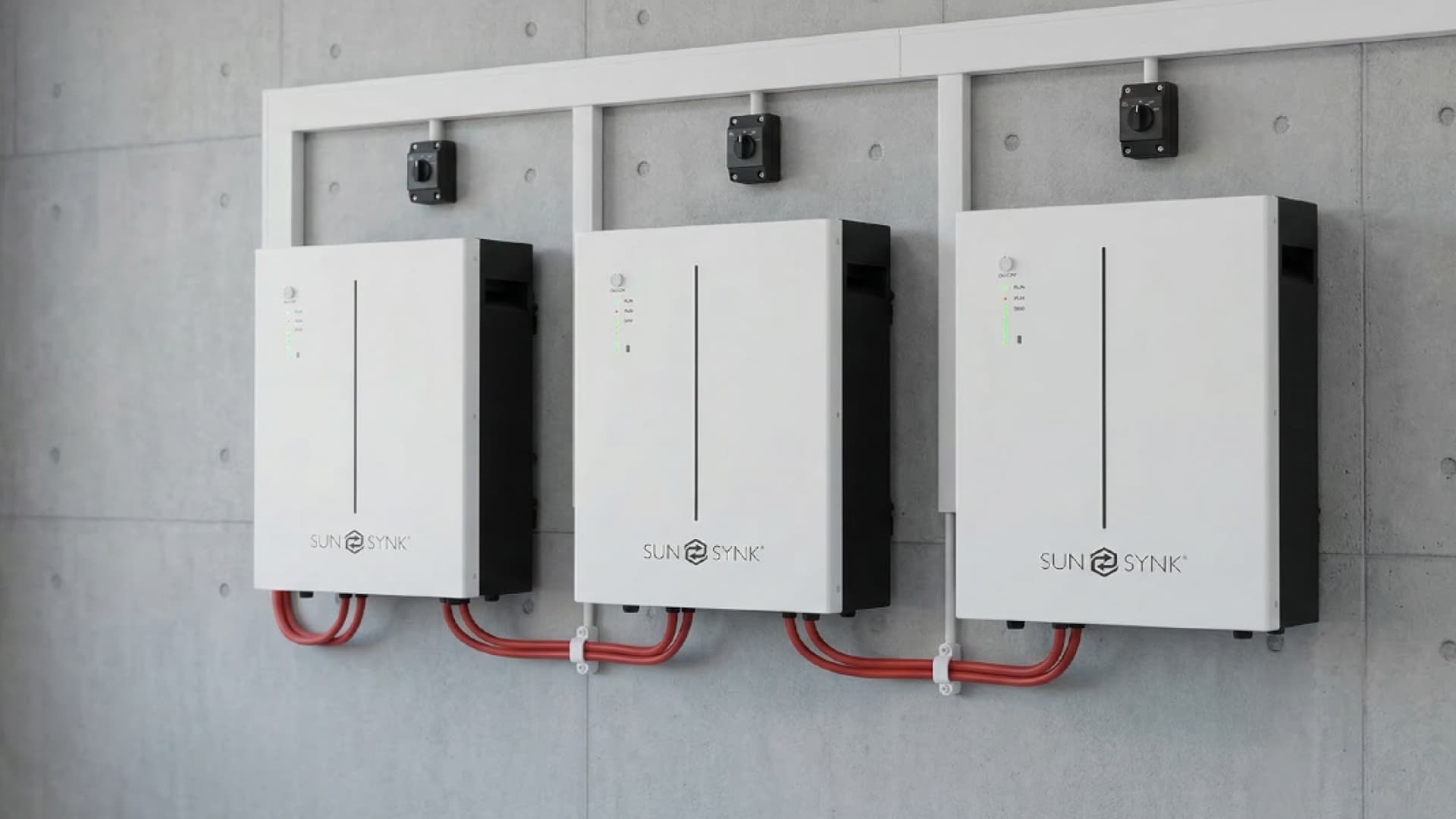
For most South African homes, a 5kW Sunsynk inverter is commonly paired with one to two lithium batteries. One battery can cover light essentials for a few hours. Two batteries give you a far more comfortable backup setup for overnight use, longer outages, and heavier household loads.
The exact answer depends on what you want to run, for how long, and how deeply the batteries are allowed to discharge. This guide explains the practical way to size your battery bank without overbuying, under-sizing, or expecting one battery to do a job it was never designed for.
The Short Answer
A 5kW Sunsynk inverter does not automatically need five batteries. The inverter size tells you the maximum power output it can supply at once. The battery bank tells you how long it can supply that power.
Here is the practical starting point:
| Backup goal | Typical battery setup | What it usually covers |
|---|---|---|
| Light essentials only | 1 x ±5kWh lithium battery | Wi-Fi, lights, TV, fridge, laptop charging |
| Comfortable home backup | 2 x ±5kWh lithium batteries | Essentials plus longer runtime and better overnight coverage |
| Heavy or extended backup | 3+ x ±5kWh lithium batteries | More appliances, longer outages, partial daytime-to-night energy shifting |
| Whole-home backup | Custom design required | Depends heavily on geyser, stove, aircon, pump, and other high-load appliances |
A common mistake is thinking a 5kW inverter means you need a 5kWh battery. Those are different measurements. A 5kW inverter is about power output. A 5kWh battery is about stored energy.
kW vs kWh: The Difference That Matters
Understanding this one point will make the entire battery-sizing process easier.
kW measures power. It tells you how much electricity the inverter can deliver at one time.
kWh measures energy. It tells you how much electricity is stored or used over time.
A 5kW Sunsynk inverter can theoretically supply up to 5kW of load at once, depending on installation settings and system design. A typical wall-mounted lithium battery in this class stores roughly 5kWh of energy before depth-of-discharge limits are applied.
Example:
| Appliance group | Approximate load | What it means |
|---|---|---|
| Wi-Fi router + fibre ONT | 20–40W | Very low draw |
| LED lights | 50–150W | Low draw |
| Fridge/freezer cycling | 100–300W average | Moderate draw over time |
| TV and decoder/streaming box | 100–250W | Moderate draw |
| Kettle | 1,800–2,200W | High short-term draw |
| Microwave | 1,000–1,500W | High short-term draw |
| Geyser | 2,000–4,000W | Very high draw |
| Electric oven or hob | 2,000–6,000W+ | Usually not suitable for basic backup |
The inverter may be able to handle a high load for a short period, but the battery capacity decides how long the system will last.
How Battery Capacity Works
Most modern Sunsynk residential systems use lithium batteries, often around the 5kWh class. A 51.2V 100Ah lithium battery stores approximately 5.12kWh nominal energy. Sunsynk’s own lithium battery range includes 51.2V 100Ah modules with built-in battery management systems, and Sunsynk also lists 5.32kWh lithium-ion phosphate battery modules in its range.
You do not normally use 100% of a battery’s rated capacity. The usable portion depends on the battery chemistry, inverter settings, manufacturer guidance, and warranty conditions.
As a working estimate:
| Battery size | Usable at 80% depth of discharge | Usable at 90% depth of discharge |
|---|---|---|
| ±5.0kWh battery | ±4.0kWh | ±4.5kWh |
| ±5.12kWh battery | ±4.1kWh | ±4.6kWh |
| ±5.32kWh battery | ±4.3kWh | ±4.8kWh |
| 2 x ±5.12kWh batteries | ±8.2kWh | ±9.2kWh |
These are planning figures, not a final design spec. Your installer should confirm the exact usable capacity using the battery model, inverter settings, warranty requirements, and the loads you want backed up.
Simple Formula: How to Calculate Batteries Needed
Use this formula as a starting point:
Required battery capacity = backup load in kW × backup hours
Number of batteries = required battery capacity ÷ usable kWh per battery
Then round up to the next full battery.
Example 1: Essentials for 4 Hours
Let’s say you want to run:
| Load | Approximate draw |
|---|---|
| Wi-Fi and router | 40W |
| Fridge/freezer average | 200W |
| LED lights | 100W |
| TV and laptop | 250W |
| Total | 590W or 0.59kW |
Backup need:
0.59kW × 4 hours = 2.36kWh
One ±5kWh lithium battery is usually enough for this kind of essentials-only setup, assuming the battery is healthy, correctly configured, and not also powering hidden loads.
Example 2: Essentials Overnight
Now let’s say you want 10 hours of backup overnight:
0.59kW × 10 hours = 5.9kWh
One battery may not be enough once usable capacity and safety margins are considered. Two batteries would be the more sensible recommendation.
Example 3: Higher Household Load
If your backed-up circuits average 1.2kW and you want 6 hours:
1.2kW × 6 hours = 7.2kWh
Two ±5kWh lithium batteries are typically the minimum. Three may be better if you want a stronger reserve, run the battery less deeply, or have irregular high-load use.
What One Battery Can Realistically Run
A single ±5kWh lithium battery paired with a 5kW Sunsynk inverter is best for a carefully managed essentials circuit.
It can usually handle:
- Wi-Fi and fibre
- LED lighting
- TV or laptop charging
- Fridge or freezer
- Alarm system and gate motor
- Small electronics
- A few low-draw plugs
It is not ideal for running everything in the house as normal.
Avoid putting these on a small battery backup circuit unless the system has been specifically designed for it:
- Electric geyser
- Electric oven
- Electric hob
- Kettle
- Tumble dryer
- Pool pump
- Washing machine heating cycle
- Multiple aircons
- Borehole pump or pressure pump without proper surge allowance
These loads either draw too much power, drain the battery quickly, or create startup surges that need to be allowed for in the system design.
Why Two Batteries Are Often the Sweet Spot
For a typical home, two ±5kWh lithium batteries offer a better balance of cost, comfort, and usable runtime.
Two batteries generally give you:
- Better overnight backup
- Less battery stress per cycle
- More usable energy reserve
- Better support for fridge cycling, lighting, Wi-Fi, and entertainment loads
- More flexibility if solar panels recharge during the day
- A safer margin for cloudy weather or longer outages
This is especially relevant in South Africa where backup needs are not only about load-shedding. Local faults, cable theft, transformer failures, and municipal outages can still leave a home without power for longer than expected.
One battery is a good starting point for light loads. Two batteries are usually the more comfortable home setup.
How Solar Panels Change the Answer
Solar panels reduce how much battery capacity you need during daylight hours because they can power loads and recharge the battery while the sun is available.
Without solar panels, your battery bank is just a stored-energy backup. Once it is depleted, you wait for grid power to recharge it.
With solar panels, the system can:
- Run daytime loads directly from solar
- Recharge the batteries after morning use
- Reduce grid electricity use
- Keep more battery reserve available for evening and overnight use
That does not mean you can use a tiny battery bank and expect unlimited backup. Solar production depends on panel size, roof orientation, shading, weather, and season. Winter solar production is lower, especially in areas with cloudy or rainy winter patterns.
If your goal is daytime energy savings plus evening backup, battery and panel sizing should be designed together.
Do You Need More Batteries for a 5kW Inverter Than a 3.6kW Inverter?
Not necessarily. You need more batteries when your energy requirement is higher, not simply because the inverter is larger.
A 5kW inverter can run more load at once than a smaller inverter. That often encourages people to connect more appliances to backup. Once you do that, your battery requirement goes up.
For example:
| Setup | Battery need |
|---|---|
| 5kW inverter backing up lights, Wi-Fi, fridge, TV | 1–2 batteries may be enough |
| 5kW inverter backing up most household plug circuits | 2–3 batteries may be needed |
| 5kW inverter expected to support geyser, kettle, aircon, and oven | Needs careful design and likely load exclusions |
The inverter gives you capacity. The battery bank gives you duration. The DB board design decides what is allowed to run on backup.
Recommended Starting Setups
Use the table below as a practical guide before requesting a proper quote.
| Home type / use case | Suggested starting point | Notes |
|---|---|---|
| Small home, essentials only | 1 x ±5kWh lithium battery | Good for Wi-Fi, lights, fridge, TV, laptops |
| Family home, evening and overnight backup | 2 x ±5kWh lithium batteries | Better comfort and reserve |
| Home office with critical uptime | 2 x ±5kWh lithium batteries minimum | Add solar if daytime outages are a concern |
| Larger home with more backed-up circuits | 3+ x ±5kWh lithium batteries | Needs load assessment |
| Solar-first system for savings and backup | 2+ batteries plus solar array | Panel sizing matters as much as battery sizing |
| Geyser or heavy appliances on backup | Custom design required | Often better handled with exclusions or alternative water heating |
If you are unsure, start by listing what must stay on during an outage. That list matters more than the inverter size on its own.
What AC Direct Needs to Size the System Properly
Before quoting or confirming battery quantity, AC Direct needs to understand your real backup requirement.
Prepare the following:
- A list of appliances you want to run during an outage
- How many hours of backup you want
- Whether you already have or plan to add solar panels
- Your current electricity usage if available
- Whether you are on prepaid or municipal billing
- Whether you want only essentials or partial whole-home backup
- Any high-load items you expect to run, such as geyser, aircon, pump, oven, or pool equipment
A proper solar design is not just “5kW inverter plus one battery”. It is load profile, battery capacity, solar generation, wiring, protection, and customer expectations working together.
Use the Solar Wizard or browse Sunsynk inverter and battery options to start comparing systems.
Internal Links
- Complete guide to solar power in South Africa
- Solar vs Eskom: who wins in the long run?
- Lithium batteries for backup power and solar applications
- What can you run on a backup solar or inverter system?
- Use the Solar Wizard
FAQ: 5kW Sunsynk Inverter Battery Sizing
How many batteries do I need for a 5kW Sunsynk inverter?
Most homes need one to two lithium batteries for a 5kW Sunsynk inverter. One battery is usually enough for light essentials such as Wi-Fi, lights, fridge, TV, and laptop charging. Two batteries are a better fit for longer backup periods, overnight use, or family homes with more backed-up circuits. The final number depends on your load, backup hours, battery size, and solar panel setup.
Is one battery enough for a 5kW Sunsynk inverter?
Yes, one battery can be enough if you only want to back up essential low-draw loads. It is not enough if you expect to run the house as normal, especially with geysers, ovens, kettles, pool pumps, or aircons connected to backup. A single battery setup works best when the DB board is split correctly so only essential circuits are backed up.
How long will a 5kWh battery last on a 5kW inverter?
A 5kWh battery can theoretically run a 1kW load for about five hours before depth-of-discharge losses, but real-world usable energy is lower. At 80–90% usable capacity, a ±5kWh lithium battery gives roughly 4–4.5kWh of usable energy. That could run a 500W essentials load for around 8 hours, or a 2kW load for only about 2 hours. Runtime depends entirely on what is switched on.
Can I run my geyser on a 5kW Sunsynk inverter?
A geyser can draw a large portion of a 5kW inverter’s capacity and will drain batteries quickly. In many homes, the geyser is excluded from essential backup circuits because it is a high-load appliance. If hot water backup is important, consider a dedicated design using solar water heating, a heat pump, timer control, or a properly engineered system with enough battery and solar capacity.
Do I need solar panels with a 5kW Sunsynk inverter and battery?
You do not need solar panels for basic battery backup, but solar panels make the system far more useful. Without solar, the batteries only recharge when grid power is available. With solar, the system can power daytime loads and recharge the battery during sunlight hours. For energy savings and longer backup resilience, solar panels and batteries should be sized together.
How many batteries do I need for overnight backup?
Most homes need two ±5kWh lithium batteries for comfortable overnight backup. One battery may work for a very light essentials-only load, but it leaves less reserve for fridge cycling, TV use, Wi-Fi, lighting, and unexpected longer outages. If you work from home or need medical, security, or business-critical equipment powered overnight, a proper load calculation is essential.
Help Article: Quick Battery Sizing for a 5kW Inverter
Short-form guide | 3 min read | Category: Product Help → Solar & Backup Power
The quickest way to estimate battery size is to add up the appliances you want to run, multiply by the backup hours you need, then divide by usable battery capacity.
Step 1: List your essential loads
Start with the essentials only:
| Load | Typical planning range |
|---|---|
| Wi-Fi and fibre | 20–40W |
| LED lights | 50–150W |
| Fridge/freezer average | 100–300W |
| TV or laptop setup | 100–300W |
| Alarm and gate motor standby | Low, but still important |
Avoid including geysers, ovens, kettles, tumble dryers, and aircons unless your system has been specifically designed for those loads.
Step 2: Estimate your total load
Example essentials load:
Wi-Fi + lights + fridge + TV = ±600W or 0.6kW
Step 3: Multiply by backup hours
0.6kW × 6 hours = 3.6kWh needed
Step 4: Allow for usable capacity
A ±5kWh lithium battery usually gives roughly 4–4.5kWh usable energy, depending on depth-of-discharge settings. In this example, one battery may work. If the same home wants 10–12 hours of backup, two batteries are safer.
Step 5: Confirm with a proper design
A final system design must confirm battery model, inverter settings, backed-up circuits, solar panel input, surge loads, and protection requirements.
Related: Full 5kW Sunsynk battery sizing guide | Use the Solar Wizard