


Sunsynk Inverters: Solar Power Guide for SA
Sunsynk Inverters: Solar Power Guide for SA
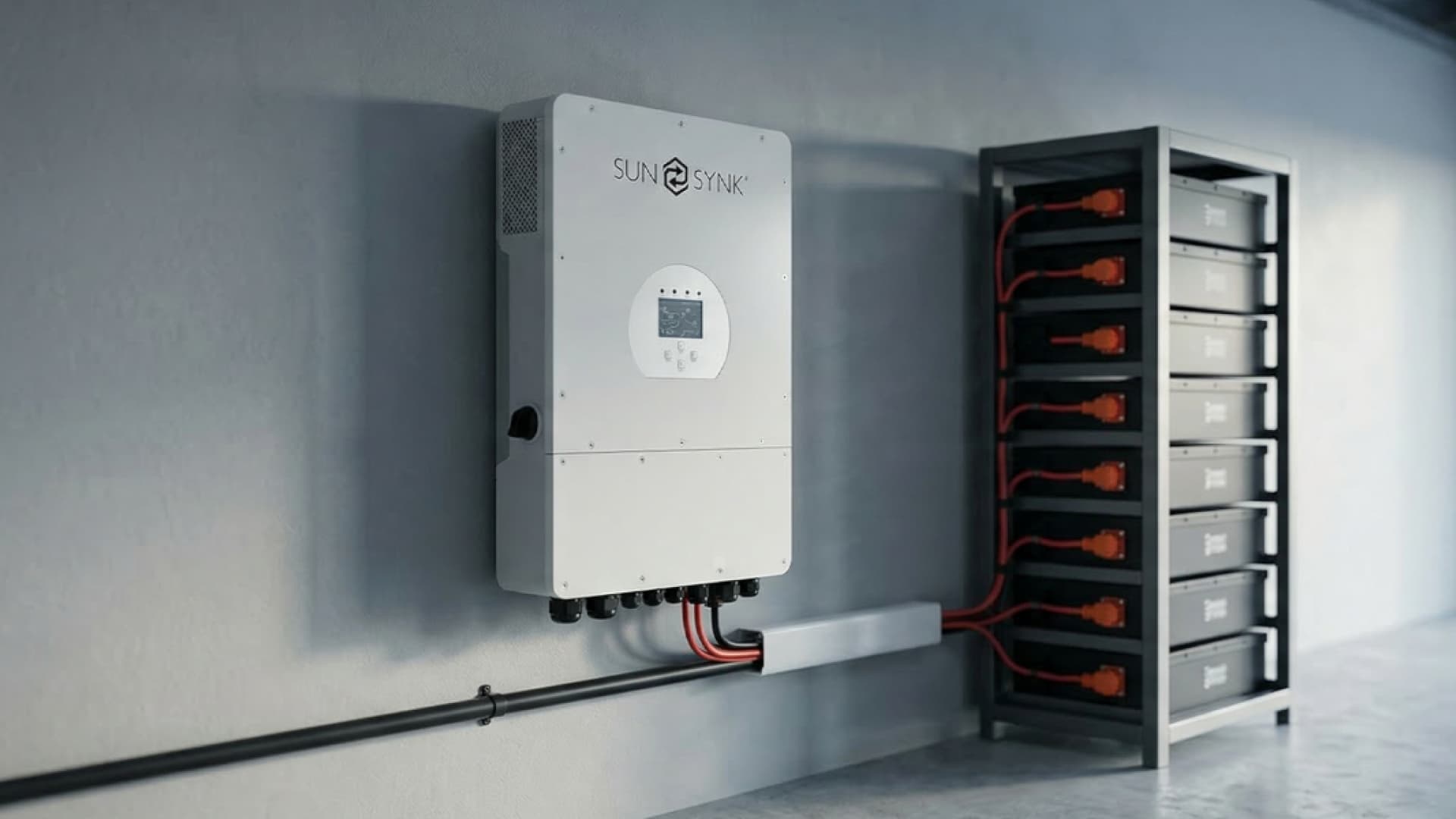
Sunsynk inverters are popular in South Africa because they sit in the middle of what most homes and businesses actually need: solar power, battery backup, grid connection, and flexible energy management in one system.
This guide explains what a Sunsynk inverter does, when it makes sense, how to choose the right size, and what to check before pairing it with batteries and solar panels. It is written for South African buyers comparing solar backup options, not for installers reading a wiring manual.
What Does a Sunsynk Inverter Do?
A Sunsynk inverter converts electricity between the different parts of a solar power system.
Solar panels produce direct current (DC). Your home or business uses alternating current (AC). Batteries also store energy as DC. The inverter manages the movement between these energy sources so your property can use solar power during the day, battery power when needed, and grid power when solar or battery supply is not enough.
In a typical hybrid setup, the inverter can:
- Convert solar panel power into usable household electricity
- Charge batteries from solar or grid power, depending on system settings
- Supply selected backed-up circuits during grid outages
- Manage when the system uses solar, batteries, or Eskom/municipal power
- Monitor system performance through compatible apps or data loggers
- Work with compatible lithium batteries and, on certain models, selected lead-acid configurations
That flexibility is the reason hybrid inverters have become the default choice for many South African solar installations. A grid-tied inverter may reduce daytime electricity use, but it usually cannot provide backup without batteries. An off-grid system can run independently from the grid, but it needs a much larger design margin. A hybrid Sunsynk system sits between those two extremes.
Why Sunsynk Inverters Are Popular in South Africa
The South African solar market has shifted from basic backup systems to smarter energy-management systems. Buyers no longer only ask, “Will my lights stay on?” They ask, “Can I reduce my prepaid usage, run essentials during outages, add panels later, and monitor the system properly?”
Sunsynk inverters appeal to this market because they are designed for hybrid use. Many models support solar input, battery storage, grid interaction, generator input, programmable time-of-use settings, and monitoring through Sunsynk-compatible platforms. Exact features depend on the model, so always check the current datasheet before buying.
For South African homes, a Sunsynk system is usually chosen for one of three reasons:
| Need | Why a Sunsynk inverter helps |
|---|---|
| Backup power | Keeps selected essential circuits running when grid power is unavailable |
| Electricity savings | Uses daytime solar generation to reduce grid consumption |
| System flexibility | Allows batteries and panels to be scaled around the property’s usage profile |
The important point is that an inverter is not the whole system. The final result depends on solar panel capacity, battery capacity, installation quality, inverter size, backup-circuit selection, and how the system is configured.
Sunsynk as a Hybrid Solar Inverter
Most buyers looking at Sunsynk are considering a hybrid inverter. A hybrid inverter combines solar, battery, and grid management in one system.
This is useful because South African households rarely have one simple power requirement. You may want to use solar during the day, charge batteries for evening use, keep a fridge and Wi-Fi online during outages, and still fall back to the grid when weather is poor. A hybrid inverter can manage those priorities far better than a basic inverter-charger.
A hybrid Sunsynk system is usually suitable if you want:
- Solar panels now or in the near future
- Battery backup for selected essentials
- Better control over grid use
- A system that can be expanded over time
- Monitoring of solar production, battery state, and load behaviour
It may be overkill if you only need a small plug-and-play backup system for Wi-Fi and a laptop. It may also be underdesigned if you expect one small inverter and one battery to run an entire large home, geyser, oven, pool pump, and multiple aircons. Expectations matter as much as the hardware.
Grid-Tied, Hybrid, or Off-Grid: Where Sunsynk Fits
Sunsynk is most commonly used in hybrid systems, but the right solar setup depends on what you want the system to do.
| System type | Batteries? | Backup during outages? | Best for |
|---|---|---|---|
| Grid-tied solar | Usually no | Usually no | Businesses and homes that mainly want daytime bill reduction |
| Hybrid solar | Yes, if backup is needed | Yes, for selected circuits | Most South African homes and small businesses |
| Off-grid solar | Yes, large battery bank | Yes, if sized correctly | Farms, remote properties, lodges, and sites with weak or no grid access |
A hybrid Sunsynk inverter is often the practical middle ground. You can stay connected to the grid, use solar to reduce usage, and add enough battery storage to cover selected essentials. Fully off-grid systems are possible, but they require much more careful design because there is no grid safety net when weather, load, or battery state changes.
For a deeper comparison, see Grid-tied vs hybrid vs off-grid solar systems.
What Size Sunsynk Inverter Should You Buy?
The right Sunsynk inverter size depends on the loads you want to run at the same time. It is not chosen only by the number of bedrooms or the size of the house.
A rough residential guide:
| Inverter size | Typical use case | Watch-outs |
|---|---|---|
| 3.6 kW | Small essential-load backup | Not suited to heavy appliances running together |
| 5 kW / 5.5 kW | Common home backup and solar starter system | Load selection matters; not “whole house” for every home |
| 8 kW | Larger homes or more demanding backup circuits | Battery and panel sizing must match the load |
| 12 kW+ | Larger residential or small commercial systems | Requires proper site design and compliance checks |
| Three-phase systems | Commercial, farms, larger properties | Must be designed around the electrical supply and load profile |
A 5 kW system can be excellent for essentials: lights, Wi-Fi, TVs, a fridge, gate motor, security, and selected plugs. It is not automatically enough for high-demand appliances like geysers, ovens, kettles, tumble dryers, pool pumps, borehole pumps, or multiple aircons unless the system is deliberately designed for those loads.
Before choosing inverter size, list your essentials and separate them from heavy loads. Then check both instantaneous power demand and energy storage requirement. The inverter handles the power draw at a moment in time. The battery bank determines how long the system can keep running.
For battery sizing, read How many batteries do I need for a 5kW Sunsynk inverter?.
Which Battery Should You Use with a Sunsynk Inverter?
Most modern Sunsynk installations use lithium batteries because they are compact, efficient, and better suited to frequent cycling than older battery types. Compatibility still matters. The battery must be suitable for the inverter model, voltage range, communication protocol, and intended load.
When comparing batteries, check:
- Usable capacity in kWh, not just nominal capacity
- Battery chemistry and cycle-life rating
- Depth of discharge guidance
- Compatibility with the inverter’s battery management system
- Warranty conditions
- Expandability if you want to add more capacity later
- Whether the battery is approved or commonly used with the inverter model
The “best” battery is not always the biggest or most expensive one. A well-matched battery that communicates correctly with the inverter and suits your usage pattern is usually the safer choice.
If your goal is backup only, you may prioritise enough capacity to get through outage periods. If your goal is electricity saving, you may need enough battery capacity to store excess solar for evening use. If your goal is partial energy independence, battery sizing becomes more important and should be designed properly from the start.
Solar Panels, MPPTs, and System Design
An inverter’s solar input capacity determines how much PV can be connected, how the strings are arranged, and how well the system can harvest energy during the day. Sunsynk hybrid inverters commonly use MPPT technology, which helps the system track the best voltage and current point from the solar array as sunlight changes.
This matters in South Africa because real roofs are rarely perfect. Shading, roof direction, panel angle, and seasonal sun movement all affect generation. A good installer will design the panel layout around:
- Available roof space
- Roof orientation and tilt
- Shade from trees, chimneys, parapets, or neighbouring buildings
- Panel wattage and string voltage
- Inverter MPPT limits
- Cable runs and protection
- Local compliance requirements
Do not choose panels in isolation from the inverter. Panel quantity, panel wattage, string design, battery size, and inverter capacity all need to work together.
Monitoring and Smart Energy Use
One of the biggest benefits of a modern hybrid inverter is visibility. Instead of guessing where your electricity goes, you can see solar production, battery charge level, grid use, and load behaviour.
Monitoring helps you make better decisions. For example, you may discover that the pool pump, geyser, kettle, or office equipment is responsible for more daytime demand than expected. You can then shift certain loads to sunny hours, reduce unnecessary standby usage, or adjust battery settings.
Smart monitoring is also useful for troubleshooting. A sudden drop in solar production, unusual battery behaviour, or repeated overload events can be spotted early before they become bigger problems.
That said, monitoring is only useful when the system is configured properly. Time-of-use settings, battery reserve levels, export settings, and essential-load circuits should be set by a qualified installer who understands your usage pattern.
Common Mistakes When Buying a Sunsynk System
The most common mistake is buying around inverter size alone. A 5 kW inverter with too little battery storage may run out quickly. A large battery bank with too few panels may not recharge properly. A strong panel array on a badly shaded roof may underperform. The system is only as good as the design.
Other mistakes include:
- Backing up too many high-demand appliances
- Confusing inverter capacity with battery runtime
- Assuming all lithium batteries are automatically compatible
- Ignoring roof shading and panel orientation
- Installing without clear essential-load separation
- Choosing a system without room for future expansion
- Not checking warranty and service conditions before purchase
A solar system is a long-term electrical installation. It should be designed around your property, your daily usage, and your expectations — not only around a bundle price.
Is a Sunsynk Inverter Right for You?
A Sunsynk inverter is a strong option if you want a flexible solar and backup system that can manage panels, batteries, grid power, and selected loads in one setup. It is especially relevant for South African homes and businesses that want more control over electricity usage without going fully off-grid.
It may be the right fit if:
- You want solar now, or you plan to add solar panels later
- You want battery backup for selected essentials
- You want to reduce grid consumption during sunny hours
- You need a system that can be scaled over time
- You are willing to have the system designed and installed properly
It may not be the right fit if you only need a small portable backup device, or if you expect a small residential system to run every appliance with no load management. In those cases, a different backup solution or a larger system design may be more appropriate.
Internal Links
- Grid-tied vs hybrid vs off-grid solar systems
- How many batteries do I need for a 5kW Sunsynk inverter?
- Solar power in South Africa: energy security guide
- Use the Solar Wizard
- Browse Sunsynk solar products
FAQ: Sunsynk Inverters in South Africa
Is the Sunsynk inverter any good?
Sunsynk inverters are a strong option for many South African hybrid solar systems when correctly sized and installed. They are popular because they can manage solar input, battery storage, grid power, and backup loads in one system. The final performance depends heavily on the battery choice, panel design, installation quality, and system settings. Always compare the specific model’s datasheet before buying.
What size Sunsynk inverter should I buy?
The right Sunsynk inverter size depends on the loads you want to run at the same time. A 5 kW or 5.5 kW unit is often used for essential home backup, while larger homes or small businesses may need 8 kW or more. Heavy loads such as geysers, ovens, pool pumps, and multiple aircons need careful planning. A proper load assessment is the safest way to choose.
How many batteries do I need for a Sunsynk inverter?
You need enough battery capacity to match your backup runtime and load requirements, not just the inverter size. One 5 kWh-class lithium battery may cover essentials for a limited period, while two or more batteries may be needed for longer runtime or heavier evening use. Battery choice must also be compatible with the inverter model and installation design.
Are Sunsynk inverters pure sine wave inverters?
Most Sunsynk hybrid inverter models are designed to provide clean AC output suitable for normal household and business loads, but you should confirm the output specification on the current datasheet for the model you are buying. Pure sine wave output is important for sensitive electronics, motors, and appliances. If you are unsure, ask AC Direct or your installer to confirm the exact model specification before purchase.
What type of battery should I use with a Sunsynk inverter?
A compatible lithium battery is usually the best choice for a modern Sunsynk solar system. Lithium batteries are better suited to frequent cycling, compact installation, and battery-management communication than older lead-acid options. Compatibility still needs to be confirmed by model, voltage, communication protocol, and warranty conditions. Do not assume every lithium battery will work correctly with every inverter.
How efficient is a Sunsynk inverter?
Sunsynk inverters are designed for high-efficiency solar and battery conversion, but the exact efficiency depends on the specific model and operating conditions. In real installations, overall system efficiency also depends on panel layout, battery behaviour, cable design, temperature, and load profile. Use the datasheet for the model you are buying rather than relying on one generic percentage.
Can a Sunsynk inverter run my whole house?
A Sunsynk inverter can run a whole house only if the inverter, batteries, panels, and backed-up circuits are sized for that purpose. Many residential systems are designed to run essentials, not every appliance at once. High-demand loads such as geysers, ovens, kettles, aircons, pool pumps, and boreholes may need to be excluded, staggered, or supported by a larger system. Whole-home backup requires a proper electrical design.
Where is Sunsynk manufactured?
Sunsynk is an international solar technology brand with manufacturing and supply chain operations outside South Africa. Manufacturing origin can vary by product line and distribution channel, so confirm the current product documentation if country of manufacture matters for procurement or compliance. For most buyers, the more important checks are local support, warranty terms, installer experience, and compatibility.
Help Article: What Size Sunsynk Inverter Do I Need?
Short-form guide | 3 min read | Category: Product Help → Solar & Backup Power
The right Sunsynk inverter size depends on your peak load, backup expectations, and whether you want solar savings, backup power, or both.
Start with your essential loads
List the appliances you want to keep running during an outage or battery period. Typical essentials include:
- Lights
- Wi-Fi router
- TV
- Fridge or freezer
- Gate motor
- Alarm system
- Selected plugs
- Work-from-home laptop or monitor
Then list heavy loads separately. Geysers, ovens, kettles, tumble dryers, pool pumps, borehole pumps, and aircons can quickly exceed a small inverter’s capacity if they run together.
Match inverter size to the load
A 5 kW or 5.5 kW Sunsynk inverter is a common starting point for essential home backup. Larger homes, offices, or properties with heavier loads may need 8 kW or more. Three-phase properties need a design that matches the electrical supply and load distribution.
Do not forget battery capacity
Inverter size controls how much power can be delivered at once. Battery size controls how long the system can run. A larger inverter with too little battery storage may still run out quickly.
Confirm before purchase
Use the Solar Wizard as a starting point, then confirm your final system with AC Direct or a qualified installer before ordering.
Related: Full Sunsynk inverter guide | Browse Sunsynk solar products