


Samsung Aircon Maintenance: The Complete South African Checklist
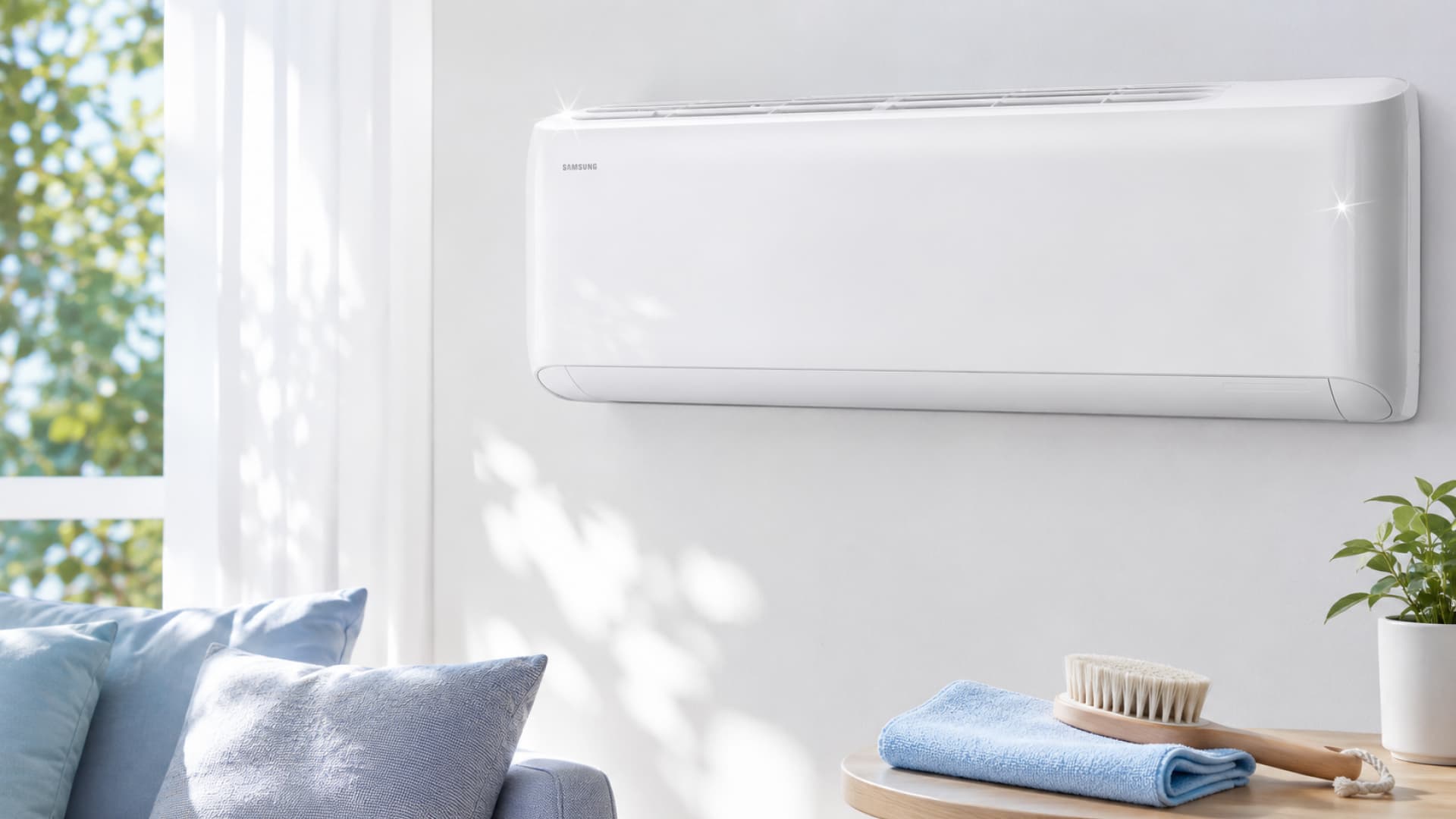
Samsung Aircon Maintenance: The Complete South African Checklist
Samsung makes one of the most reliable inverter ranges on the South African market — but even the best aircon will lose efficiency, run noisier, and fail earlier if it isn't maintained. Regular Samsung aircon maintenance is the single biggest factor in keeping your unit efficient, extending its lifespan, and avoiding costly callouts. This guide covers exactly how to do it — what you can do yourself, what needs a qualified technician, and how often.
Whether you have a Samsung wall-split, a multi-split system, or one of the newer WindFree models, the maintenance principles are the same. Follow this checklist and your unit should run reliably for 15 years or more.
How Often Should You Service a Samsung Aircon?
The short answer: at least once a year by a qualified technician, with regular filter cleaning in between.
Samsung's general guidance is to clean filters every two weeks during periods of daily use. AC Direct's house recommendation, based on typical South African usage patterns, is below — adjust upward (more frequent) if you run your aircon daily or live in a high-dust environment.
| Maintenance Task | AC Direct Recommendation | DIY or Pro? |
|---|---|---|
| Filter cleaning (typical home use) | Every 4–6 weeks | DIY |
| Filter cleaning (daily use or high-dust suburb) | Every 1–2 weeks | DIY |
| Indoor unit wipe-down | Every 3 months | DIY |
| Full professional service | Once a year | Pro |
| Refrigerant pressure check | Once a year | Pro only |
| Electrical connection inspection | Once a year | Pro only |
| Coil chemical clean | Every 2–3 years | Pro |
South African conditions vary widely. If you're in a high-dust area like parts of Johannesburg, Pretoria construction zones, or near unpaved roads, lean toward the more frequent end. Coastal homes also benefit from a 6-monthly outdoor unit check due to salt-air corrosion, even if the indoor service is annual.
Step-by-Step: Samsung Aircon Maintenance Checklist
Step 1 — Clean the Air Filters
Dirty filters are the most common cause of reduced cooling performance and higher electricity bills. Samsung aircon filters are designed to be removed and cleaned by the user.
How to clean your Samsung aircon filter:
- Turn the unit off at the wall — do not just use the remote.
- Open the front panel of the indoor unit (lift from the bottom on most Samsung wall-split models).
- Slide the filter panels out carefully.
- Tap the filters gently over a bin to dislodge loose dust.
- Rinse under lukewarm running water — do not use hot water or detergent.
- Allow to dry completely in the shade — never in direct sunlight and never replace while damp.
- Slide the filters back in and close the panel.
- Restore power and test the unit.
Signs your filter needs cleaning sooner than scheduled: reduced airflow from the vents, the unit taking longer to reach the set temperature, musty smell when the unit runs, or a visible grey dust layer on the filter mesh.
Step 2 — Clean the Indoor Unit (Evaporator Coil Area)
Dust accumulates on the evaporator coil behind the filters over time. Light buildup can be addressed with a soft brush or low-pressure compressed air. Heavy buildup — visible dark grey or black coating — requires a professional chemical coil clean.
Do not spray water directly onto the coil or any electrical components. If you are not confident doing this step, include it in your annual professional service.
Step 3 — Check and Clear the Drainage System
Every Samsung aircon removes humidity from the air and drains it via a condensate line. A blocked drain line causes:
- Water dripping from the indoor unit
- Damp patches on the wall or ceiling below the unit
- Musty odours inside the room
- Potential water damage to walls and ceilings
DIY drainage check: With the unit running in cooling mode, go outside and locate the drain pipe (usually a small plastic pipe exiting through the wall). Water should be dripping steadily during operation. No drip = possible blockage. A technician can clear this with a wet/dry vacuum or a drain snake.
Step 4 — Inspect the Outdoor Unit
The outdoor condenser unit takes the most punishment from the elements. Check the following every 3 months:
- Clear the area: Remove leaves, debris, or vegetation growing within 500mm of the unit. Airflow restriction is the most common cause of outdoor unit failure.
- Fins condition: The aluminium fins on the outdoor unit should be straight and unobstructed. Bent fins reduce heat exchange efficiency. A fin comb can straighten minor bends.
- Fan blades: Visually inspect for cracks or chips. A damaged blade causes vibration and accelerates bearing wear.
- Unit level: The outdoor unit must sit level on its mounting bracket or slab. An unlevel unit causes compressor oil pooling over time.
Do not hose down the outdoor unit directly — rather brush debris off the fins with a soft brush.
Step 5 — Professional Annual Service (What the Technician Does)
The following steps require a qualified HVAC technician and should form part of your annual service:
- Electrical inspection: Check all connections for tightness, corrosion, and heat damage. Loose connections are a fire risk.
- Refrigerant pressure check: Measure system pressure against Samsung's specified operating range. Low pressure indicates a refrigerant leak — topping up without finding and fixing the leak is not a solution.
- PCB (printed circuit board) check: Test the control board, reset the microprocessor if required, and confirm the PCB receiver is functioning correctly.
- Remote controller test: Verify all functions including mode, fan speed, timer, and sleep functions.
- Full cooling and heating test: Confirm the unit reaches set temperature in both modes and that the switchover is smooth.
- Louvre operation: Check the horizontal and vertical louvre sweep functions and lubricate pivot points if needed.
- Gas leak detection: Use an electronic gas leak detector on all refrigerant line connections.
AC Direct technicians follow this checklist on every Samsung service call. Book a Samsung aircon service.
What a Samsung Aircon Service Typically Costs in South Africa
Service costs vary by unit size, location, and what the inspection finds. Indicative ranges based on the SA market:
| Service Type | Typical Range* |
|---|---|
| Basic filter clean + inspection | R350 – R650 |
| Full annual service (labour) | R600 – R1,300 |
| Coil chemical clean | R800 – R1,600 |
| Refrigerant top-up (per kg) | R400 – R900 |
| Drain line clear | R300 – R550 |
*Indicative pricing — actual cost depends on unit size, accessibility, and travel. Contact AC Direct for a quote specific to your unit and area.
Signs Your Samsung Aircon Needs Immediate Attention
Do not wait for your annual service if you notice any of the following:
- Ice on the indoor or outdoor unit — turn the unit off immediately and call a technician. Ice buildup indicates refrigerant issues or severely blocked airflow.
- Hissing or bubbling sounds — likely refrigerant leak.
- Water dripping from the indoor unit — blocked drain line. Continued operation risks water damage.
- Burning smell — turn off at the wall immediately. Electrical fault.
- Unit cycling on and off rapidly — compressor issue or refrigerant problem.
- Remote not responding despite new batteries — PCB or IR receiver fault.
Internal Links
- What size aircon do I need? BTU sizing guide for South African rooms
- Inverter vs non-inverter aircons: which is right for you?
- Do Samsung aircons use a lot of electricity?
- Full aircon maintenance checklist
- Browse Samsung aircons at AC Direct
FAQ: Samsung Aircon Maintenance in South Africa
How often should my Samsung aircon be serviced?
At minimum, once a year by a qualified technician. Filter cleaning should be done by the user every 4–6 weeks for typical home use, or every 1–2 weeks if you run the unit daily or live in a high-dust area like parts of Johannesburg. Units running year-round in coastal areas may benefit from a service every 6 months due to salt-air corrosion on the outdoor unit.
Can I clean my Samsung aircon filter myself?
Yes. Samsung designs its wall-split filter panels for easy user removal and cleaning. Remove the front panel, slide out the filters, rinse with lukewarm water, dry fully in the shade, and replace. Never use detergent or hot water, and never reinsert a damp filter. If the filter mesh is torn or warped, replace it rather than cleaning it.
What happens if I don't service my Samsung aircon?
An unserviced aircon progressively loses efficiency — meaning it uses more electricity to produce the same cooling output. HVAC industry estimates put efficiency loss from dirty coils at up to 30%. Blocked filters strain the fan motor and compressor. Left long enough, deferred maintenance turns into component failure, and a service call that might have cost a few hundred rand becomes a repair bill several times higher.
How do I know if my Samsung aircon has a refrigerant leak?
The signs are: reduced cooling performance despite the unit running normally, ice forming on the indoor unit or refrigerant lines, a hissing or bubbling sound from the unit, and electricity bills increasing without a change in usage patterns. Refrigerant does not get "used up" in normal operation — if the system is low, it is leaking. A technician must find and repair the leak before recharging the system.
Does my Samsung aircon warranty cover maintenance?
Samsung's warranty covers manufacturing defects, not routine maintenance or damage caused by lack of maintenance. In practice, Samsung can decline warranty claims on units that show evidence of poor maintenance (e.g., severely blocked coils causing compressor failure). Keeping a maintenance record — dates, technician name, work performed — protects your warranty claim if a fault does occur.
How long will a Samsung aircon last with proper maintenance?
A well-maintained Samsung inverter unit can realistically last 15–20 years. The compressor is the most expensive component — proper refrigerant levels, clean coils, and correct electrical connections are the three factors that most directly protect compressor lifespan. Units that are regularly serviced and not run with blocked filters routinely outlast the manufacturer's stated service life.
What is the difference between a service and a chemical clean?
A standard annual service covers inspection, filter cleaning, electrical checks, drainage clearance, and a performance test. A chemical clean goes further — the technician applies a specialised foaming chemical to the evaporator coil that breaks down grease, mould, and compacted dust that water alone cannot remove. A chemical clean is recommended every 2–3 years, or sooner if the unit has a persistent musty smell despite filter cleaning.
Help Article: How to Clean Your Samsung Aircon Filter (Quick Reference)
Short-form guide | 3 min read | Category: Product Help → Maintenance
What you need: A soft cloth, access to a tap, and 15 minutes.
When to do it: Every 4–6 weeks for typical home use, or whenever the unit takes longer than usual to cool the room. More often (every 1–2 weeks) if you run the aircon daily or live in a high-dust area.
Instructions
- Turn the unit off at the wall — not just via the remote. This prevents the unit from starting while the panel is open.
- Open the front panel — lift the bottom edge of the front cover upward. On most Samsung wall-split models it clicks open and stays up.
- Remove the filter panels — slide them horizontally toward the centre, then pull down and out. There are typically two panels side by side.
- Remove loose dust — tap the filter gently over a bin or tap it against your palm. Do not shake vigorously.
- Rinse under running water — use lukewarm water, running from the clean side through to the dirty side. Do not use soap, detergent, or a pressure hose.
- Dry completely — place flat in the shade. Do not use a hair dryer or put in direct sunlight. The filter must be completely dry before reinserting — a damp filter promotes mould growth inside the unit.
- Reinsert the filters — slide back into position until they click. Close the front panel.
- Restore power and test — turn the unit on and confirm normal airflow has returned.
What if cleaning doesn't help?
If airflow remains weak after cleaning, the evaporator coil behind the filter may be dirty. This requires a professional service — do not attempt to clean the coil yourself. Contact AC Direct to book a service.
If the filter mesh is torn, cracked, or warped, replace it. Running the unit without an intact filter allows dust to accumulate directly on the coil, which accelerates the need for expensive chemical cleaning.
Related: Full Samsung aircon maintenance checklist | Book a service with AC Direct