


Portable Fridge-Freezers: SA Buying Guide
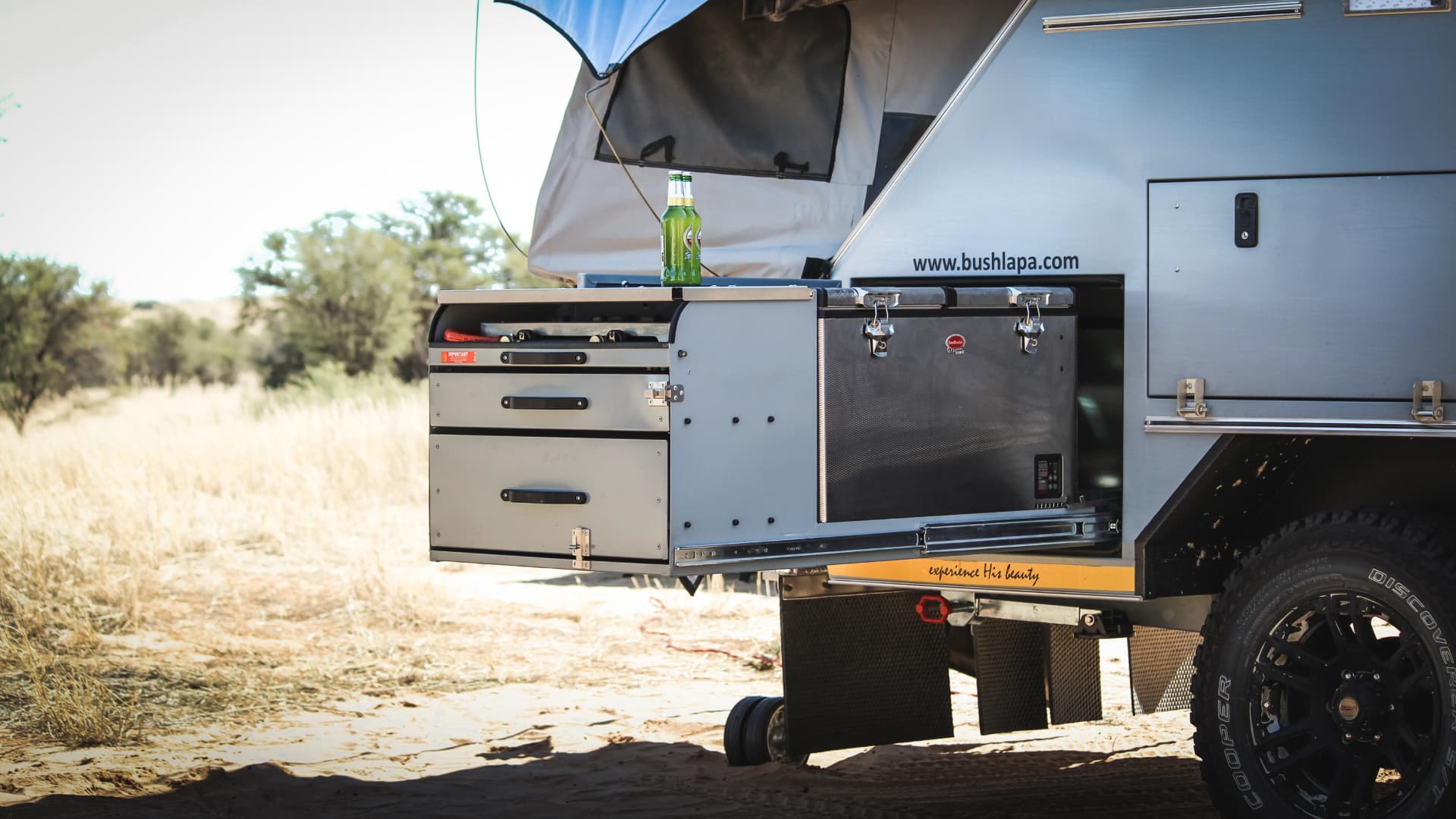
Portable Fridge-Freezers: SA Buying Guide
A portable fridge-freezer is one of those products that feels like a luxury until you have used one properly. For camping, 4x4 trips, fishing weekends, caravans, market stalls, bakkies, road trips and outdoor events, it gives you proper temperature-controlled storage without relying on bags of ice.
This guide explains how portable fridge-freezers work, where they make sense, what size to choose, what 12V means, and what to check before buying one for South African conditions.
What Is a Portable Fridge-Freezer?
A portable fridge-freezer is a mobile cooling appliance designed to keep food and drinks chilled or frozen while you are away from a fixed kitchen fridge. Unlike a cooler box, it uses an active cooling system, so it can maintain a set temperature as long as it has a suitable power supply.
Portable fridge-freezers are popular in South Africa because they suit the way people actually travel and entertain. They are useful for camping, overlanding, caravans, boats, trailers, bakkies, game farms, road trips, fishing trips, market stalls, outdoor events and extra home storage when the main fridge is full.
Many portable units can run from a vehicle power supply, campsite power or a home plug, depending on the model. Some are single-zone units, while others have dual-zone compartments so you can use one side as a fridge and the other as a freezer.
The main benefit is control. You can store fresh food, frozen meat, drinks, ice, medication or snacks at a more stable temperature than you would get from a basic ice cooler.
Portable Fridge-Freezer vs Cooler Box
A cooler box is simple, affordable and useful for short trips. A portable fridge-freezer is better when you need longer temperature control, less mess and fewer ice top-ups.
| Feature | Cooler box | Portable fridge-freezer |
|---|---|---|
| Cooling method | Ice or ice packs | Powered cooling system |
| Temperature control | Limited | Adjustable, model dependent |
| Best for | Short outings and day trips | Camping, road trips, overlanding and longer use |
| Ice required | Yes | No, unless you want ice separately |
| Food storage | Can become wet as ice melts | Cleaner and more controlled |
| Power needed | No | Yes |
| Upfront cost | Lower | Higher |
| Long-trip convenience | Limited | Much better |
A cooler box still has its place. For a short braai, picnic or school sports day, it may be enough. For a weekend away, a hunting trip, a multi-day camp, a caravan holiday or a long drive through hot areas, a portable fridge-freezer is usually the more practical option.
When Does a Portable Fridge-Freezer Make Sense?
A portable fridge-freezer makes sense when your food or drinks need to stay cold for longer than a normal cooler can manage.
It is especially useful if:
- You camp or caravan regularly.
- You take long road trips in summer.
- You travel by 4x4, bakkie or trailer.
- You go fishing, hunting, boating or overlanding.
- You need frozen food away from home.
- You run a small mobile shop, food stall, event stand or outdoor business.
- You want extra drinks or freezer space at home.
- You need controlled cooling for medication or specialist items.
- You want cold storage at a lodge, farm, guest unit or site office.
The more often you use it, the easier it is to justify the cost. If you only need cold drinks once or twice a year, a cooler box may be enough. If you regularly travel, entertain or need mobile refrigeration, a powered unit is a proper upgrade.
Why 12V Matters
A 12V portable fridge-freezer can run from a compatible vehicle power supply. That is what makes it useful for road trips, bakkies, 4x4s, caravans and camping.
Many portable fridge-freezers support more than one power option, such as:
| Power option | Where it is useful |
|---|---|
| 12V DC | Cars, bakkies, 4x4s and some portable power setups |
| 24V DC | Trucks, larger vehicles and some commercial applications |
| 100 to 240V AC | Home, office, campsite or lodge plug points |
| Battery or solar-supported setup | Off-grid camping, trailers and longer trips, model dependent |
Always check the exact model before buying. Do not assume every portable fridge-freezer has the same plugs, battery protection, current draw or solar compatibility.
If the unit will run from a vehicle, battery protection matters. A good setup should help prevent the fridge-freezer from draining the vehicle battery too far. For longer off-grid use, you may need a dedicated auxiliary battery, power station or solar-supported system rather than relying only on the vehicle starter battery.
How to Choose the Right Size
Portable fridge-freezers are usually compared by litre capacity. The right size depends on how many people are travelling, how long the trip is, whether you need fridge and freezer space, and how much room you have in the vehicle.
| Capacity range | Best for | Watch out for |
|---|---|---|
| 12 to 25L | Day trips, solo travel, drinks, small vehicles | Limited food storage |
| 30 to 45L | Couples, weekend trips, small families | May need careful packing |
| 50 to 65L | Family camping, longer weekends, mixed food and drinks | Takes more boot or bakkie space |
| 70 to 95L+ | Longer trips, larger families, hunting, fishing, group travel | Heavier, may need wheels or fixed placement |
Bigger is not automatically better. A large unit can be heavy, harder to move and more demanding on power. A small unit may be easier to carry but frustrating if it cannot hold enough food for the trip.
Before buying, check the outside dimensions, not only the litre capacity. Make sure it fits in your boot, bakkie canopy, trailer, caravan storage area, boat or camping setup with enough space for ventilation.
Single-Zone vs Dual-Zone
A single-zone portable fridge-freezer has one temperature-controlled compartment. It can usually be used as a fridge or freezer, depending on the temperature setting.
A dual-zone portable fridge-freezer has two compartments that can be controlled separately on suitable models. That lets you chill drinks on one side and freeze meat, ice or longer-storage food on the other.
| Setup | Best for |
|---|---|
| Single-zone fridge use | Drinks, snacks, dairy, fruit, short trips |
| Single-zone freezer use | Frozen meat, ice, bait, longer food storage |
| Dual-zone fridge and freezer | Multi-day camping, overlanding, family trips |
| Two separate units | Serious travel setups, lodges, fishing or hunting trips |
Dual-zone is usually worth considering if you travel for several days at a time or want to separate drinks from frozen food. For basic weekend drinks and snacks, a single-zone unit may be enough.
What to Check Before Buying
A portable fridge-freezer is not only a box with a compressor. The details decide whether it is practical in real use.
Capacity and layout
Look at internal space, basket layout, dividers and whether tall bottles or bulky food packs will fit. The listed litre capacity is useful, but the internal shape matters.
Power compatibility
Check whether the model supports 12V, 24V and 100 to 240V AC. For vehicle use, confirm the plug type and cable length. For camping, check whether it suits your battery or solar-supported setup.
Battery protection
If you plan to run the unit from a vehicle, battery protection is important. It helps reduce the risk of flattening the vehicle battery while the fridge-freezer runs.
Build quality
Outdoor use is rougher than kitchen use. Look for strong handles, durable casing, secure lid hinges, reliable seals and, where needed, wheels or tie-down points.
Temperature control
A good portable fridge-freezer should allow you to set the temperature for your use case. Drinks, fresh food, frozen meat and ice do not all need the same setting.
Ventilation
The unit needs space around the vents so it can release heat. Do not pack bags, bedding or boxes tightly against the ventilation openings.
Weight and movement
A large unit can become heavy once full. If you need to move it often, check handle design, wheels and whether two people will be needed.
Warranty and support
Check the warranty listed on the specific product page before buying. Outdoor products work hard, so after-sales support and spare-part availability matter.
Portable Fridge-Freezer Use Cases in South Africa
Camping and 4x4 trips
This is the classic use case. A portable fridge-freezer lets you take fresh food and cold drinks without planning every day around buying ice. For longer trips, dual-zone cooling and a proper power setup become important.
Road trips and bakkies
For long drives, a 12V fridge-freezer keeps drinks, snacks and food cold while you are travelling. It is useful for families, reps, contractors, outdoor workers and anyone spending long hours on the road.
Fishing, hunting and boating
These trips often need colder, more controlled storage than a basic cooler box can provide. A portable freezer can store bait, fish, meat or prepared food safely when the setup is correctly powered.
Events and market stalls
Small mobile businesses, market traders and event vendors can use portable fridge-freezers for chilled stock, samples or ingredients. For business use, choose a size and power setup based on operating hours, not only transport convenience.
Home backup and overflow storage
A portable fridge-freezer can also help at home when your main fridge is full, during parties, or when you need temporary overflow storage. During power interruptions, it can be useful if paired with a suitable backup power source.
Energy Use and Battery Planning
Portable fridge-freezers are generally designed to be efficient, but energy use depends on the model, size, temperature setting, ambient temperature, lid opening frequency and how well the unit is ventilated.
A unit working in a hot bakkie canopy in the Karoo will work harder than the same unit standing in a shaded kitchen. A freezer setting uses more energy than a fridge setting. Opening the lid often also increases runtime.
To reduce energy use:
- Pre-chill food and drinks before loading.
- Keep the unit shaded where possible.
- Avoid opening the lid unnecessarily.
- Do not block vents.
- Use the correct size for your trip.
- Keep door seals clean and undamaged.
- Use a sensible temperature setting.
- Use a dedicated battery or power station for longer trips.
If you are planning an off-grid camping setup, match the fridge-freezer to the battery and charging system before you leave. Guessing your power needs on day one of a trip is a quick way to flatten a battery.
Maintenance Tips
A portable fridge-freezer will last longer and work better if it is cleaned and packed properly.
After use, empty the unit, wipe it down and allow it to dry before closing it for storage. Clean the seals with a soft cloth and check that they still close tightly. Do not overload the unit or block internal airflow. Keep the vents clear and avoid leaving the unit in direct sun for long periods where possible.
During transport, secure the unit so it does not slide around in the vehicle or trailer. If it has been tilted heavily or transported roughly, follow the product manual before switching it on again.
Good maintenance is simple, but it matters. Dirty seals, blocked vents and hard impacts can all reduce performance and shorten the product’s lifespan.
Common Buying Mistakes
The most common mistake is buying only by price. A cheap unit that is too small, too heavy, poorly supported or unsuitable for your power setup can become frustrating quickly.
Avoid these mistakes:
- Choosing a size before checking the vehicle space.
- Forgetting about power supply and battery protection.
- Buying single-zone when you really need fridge and freezer storage.
- Choosing a heavy unit without checking handles or wheels.
- Blocking the vents during use.
- Expecting a vehicle starter battery to run the unit indefinitely.
- Ignoring warranty and support.
- Comparing portable fridge-freezers only with cooler boxes instead of considering how long and how often you travel.
The best portable fridge-freezer is the one that matches your trips, vehicle, storage needs and power setup.
Final Checklist Before You Buy
Before choosing a portable fridge-freezer, confirm:
- How many people it must serve
- How many days you usually travel
- Whether you need fridge only, freezer only or dual-zone use
- The available space in your car, bakkie, trailer, caravan or boat
- Whether you need 12V, 24V and AC power compatibility
- Whether battery protection is included
- How heavy the unit will be when full
- Whether the vents will have enough airflow
- Whether you need wheels, handles or tie-down points
- Warranty and support on the specific model
When you are ready, browse portable fridges and freezers or compare options in the SnoMaster range.
Internal Links
- Browse portable fridges and freezers
- Browse SnoMaster products
- SnoMaster cooling solutions guide
- SnoMaster beverage cooler guide
- Choosing the best SnoMaster wine cooler
FAQ: Portable Fridge-Freezers in South Africa
What is a portable fridge-freezer?
A portable fridge-freezer is a powered mobile cooling unit that can keep food and drinks chilled or frozen away from a normal kitchen fridge. It is commonly used for camping, road trips, 4x4 travel, caravans, boats, events and extra home storage. Unlike a cooler box, it does not rely on melting ice to keep the contents cold.
What is the difference between a cooler box and a portable fridge-freezer?
A cooler box keeps items cold with ice or ice packs, while a portable fridge-freezer uses a powered cooling system to maintain a set temperature. Cooler boxes are cheaper and simple for short outings. Portable fridge-freezers are better for longer trips, frozen food, controlled temperatures and regular outdoor use.
What size portable fridge-freezer do I need?
The right size depends on the number of people, trip length, available vehicle space and whether you need fridge or freezer storage. A compact unit can suit day trips or solo travel, while families and longer camping trips usually need a medium to large unit. Always check the external dimensions as well as the litre capacity.
Do I need a 12V portable fridge-freezer?
You need a 12V portable fridge-freezer if you want to run the unit from a compatible vehicle power supply while travelling. This is useful for bakkies, 4x4s, caravans and road trips. For longer trips, check battery protection and consider an auxiliary battery, power station or solar-supported setup.
Can a portable fridge-freezer run on solar?
Some portable fridge-freezer setups can run from solar-supported battery systems, but it depends on the model and the power setup. The fridge-freezer still needs a stable power source with enough capacity. Check the model’s wattage, power inputs and battery requirements before planning an off-grid setup.
Help Article: How to Choose a Portable Fridge-Freezer
Short-form guide | 3 min read | Category: Product Help → Appliances
Choosing a portable fridge-freezer starts with how you will use it. A family camping trip, a day trip, a bakkie work setup and a 4x4 overlanding route all need different storage and power planning.
Step 1: Choose the use case
Decide whether the unit is mainly for camping, road trips, events, fishing, hunting, business stock, vehicle use or home overflow storage. This helps narrow the capacity and power needs.
Step 2: Pick the right capacity
Choose litre capacity based on people and trip length. Small units suit day trips and drinks. Medium units suit weekends and small families. Larger units suit long trips, frozen food, group travel or outdoor business use.
Step 3: Check power options
For vehicle use, check 12V compatibility. For campsite or home use, check AC plug compatibility. For longer off-grid trips, check whether the unit can work with your battery or solar-supported system.
Step 4: Decide on single-zone or dual-zone
Choose single-zone if you only need chilling or freezing. Choose dual-zone if you want drinks cold and food frozen at the same time.
Step 5: Check the practical details
Measure your vehicle or storage area, check ventilation space, confirm weight, and look for useful features such as handles, wheels, baskets, dividers, battery protection and warranty support.
Related: Full portable fridge-freezer guide | Browse portable fridges and freezers | Browse SnoMaster products