


Water Dispensers for Home and Office
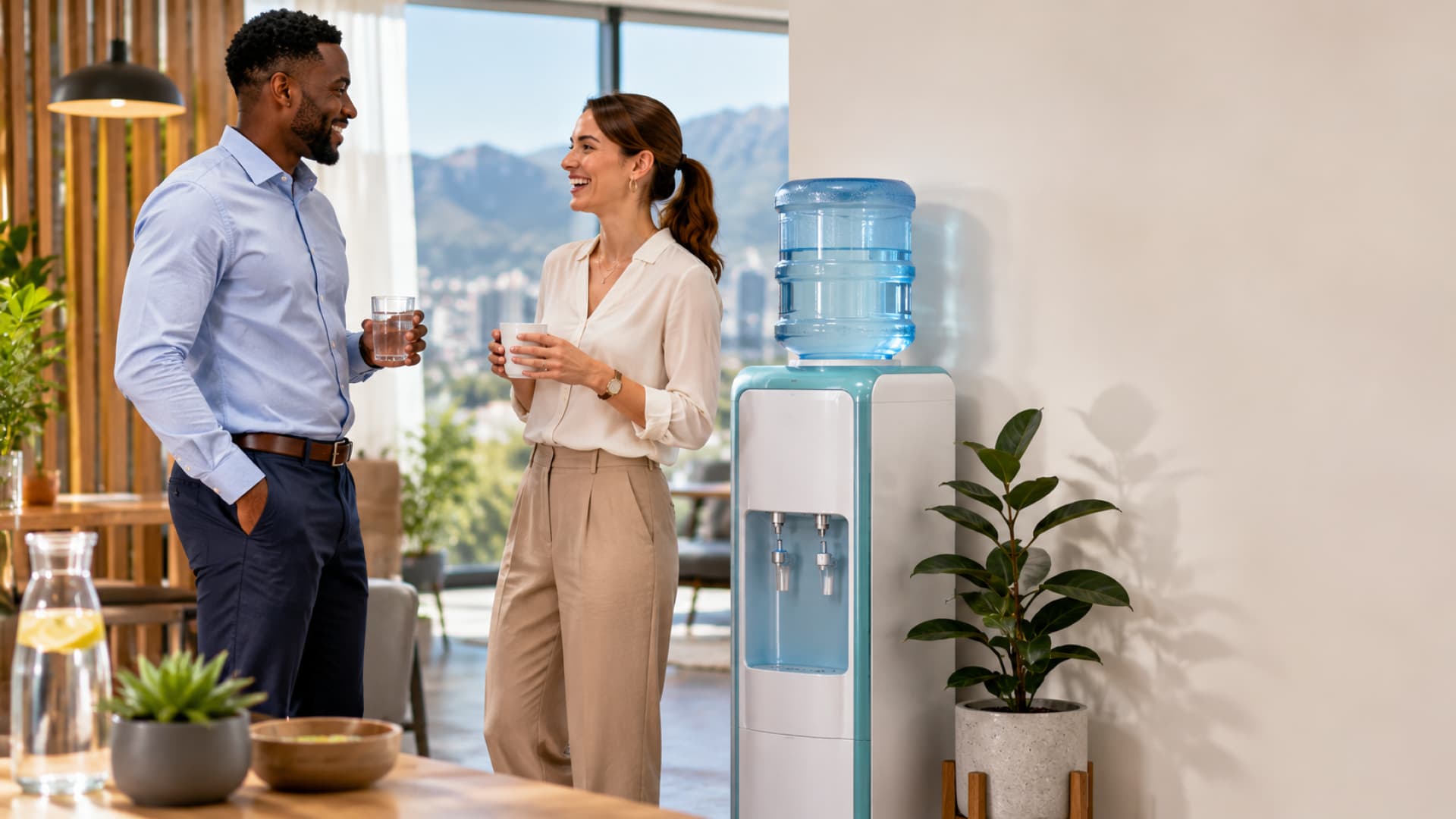
Water Dispensers for Home and Office
A water dispenser is one of those appliances that quietly solves a daily problem. It gives staff, customers, families or guests easy access to drinking water without constantly opening the fridge, boiling a kettle, filling bottles, or relying on a single kitchen tap.
This guide explains how to choose a water dispenser for a South African office, home, reception area, shop, salon, clinic, warehouse or shared space. It covers bottled vs plumbed-in dispensers, hot/cold/ambient options, maintenance, placement, hygiene, running costs and what to check before buying.
What Does a Water Dispenser Do?
A water dispenser provides convenient drinking water from either a replaceable bottle or a plumbed-in water supply. Depending on the model, it may dispense cold water, hot water, room-temperature water, or a combination of all three.
The main benefit is convenience. People drink more water when it is easy to access, tastes pleasant, and is available where they already spend time. In an office, that might be near a kitchen, meeting room or reception area. At home, it might be in the kitchen, entertainment area, braai room or home office. In a commercial setting, it might be placed where staff or customers need quick access throughout the day.
A water dispenser should not be positioned as a miracle health appliance. It is a practical hydration appliance. The right unit can improve convenience, reduce fridge clutter, support customer hospitality and make drinking water more accessible in busy spaces.
Is a Water Dispenser a Good Idea?
A water dispenser is a good idea when people need regular, convenient access to drinking water. It makes the most sense in spaces where multiple people share one kitchen, where customers or visitors wait, or where chilled drinking water is needed without using fridge space.
Good use cases include:
- Offices and staff kitchens
- Boardrooms and meeting areas
- Reception rooms and customer waiting areas
- Gyms, clinics, salons and studios
- Retail counters and small commercial spaces
- Communes, shared houses and student accommodation
- Home kitchens, entertainment areas and braai rooms
- Warehouses and workshops with staff break areas
The key is matching the dispenser to the space. A small bottled unit may be enough for a home office or compact reception. A busy workplace may need a larger capacity unit, a plumbed-in model, or a service routine that keeps bottles, filters and cleaning under control.
Office Water Dispensers: Why They Work
The original article focused on offices, and that angle still matters. In a workplace, a water dispenser is less about luxury and more about access. Staff should not have to leave the work area every time they want water, and customers should not have to ask for a glass from the kitchen.
An office water dispenser helps with:
- Convenience: Water is available in one visible, shared place.
- Hospitality: Visitors and customers can be offered water easily.
- Staff comfort: People have quick access to chilled or ambient water during the day.
- Kitchen efficiency: The fridge is not overloaded with bottles.
- Hot drinks: Hot-water models can reduce kettle queues in small offices.
- Professional presentation: A neat dispenser looks better than random bottles on counters.
For South African offices, placement matters. Put the dispenser where people naturally pass, but not where it blocks walkways, printer stations, emergency exits or customer flow. The best position is visible, easy to clean around, close to power if required, and shaded from direct sun.
Home Water Dispensers: When They Make Sense
Water dispensers are not only for offices. They can be useful in homes where drinking water is used often or where fridge space is always under pressure.
A home water dispenser may suit:
- Larger families
- Homes with children who refill bottles often
- Entertainment areas and braai rooms
- Home offices
- Flats or communes with shared fridge space
- Kitchens where chilled drinking water is needed often
- Homes that prefer bottled or filtered water for taste
A hot-and-cold dispenser can also be useful where people make tea, coffee, formula preparation, instant oats or hot drinks frequently. Always follow the product manual and safety instructions, especially around children. Hot-water taps should be treated with the same caution as kettles.
Bottled vs Plumbed-In Water Dispensers
The biggest buying decision is whether to choose a bottled dispenser or a plumbed-in dispenser.
| Type | Best for | Main advantage | Watch-out |
|---|---|---|---|
| Bottled water dispenser | Homes, small offices, rentals, temporary spaces | Easy setup with no plumbing work | Bottles need replacing and storing |
| Plumbed-in water dispenser | Larger offices, kitchens, commercial areas | Continuous supply from the water line | Needs installation and filter maintenance |
| Countertop dispenser | Small kitchens, reception desks, flats | Space-saving | Lower capacity than floor-standing units |
| Floor-standing dispenser | Offices, homes and shared areas | Better capacity and visibility | Needs floor space and stable placement |
A bottled dispenser is usually easier to install because it does not need a water connection. This makes it practical for renters, small businesses or temporary offices. The trade-off is bottle management. Someone needs to order, lift, replace and store bottles.
A plumbed-in dispenser is cleaner for high-use sites because it draws from the building’s water line and may include filtration, depending on the model. The trade-off is installation. You need the correct water point, power point, drainage considerations where relevant, and a filter replacement routine.
Cold, Hot or Ambient Water: Which Option Do You Need?
Not every water dispenser does the same job. Before buying, decide which water temperatures matter.
| Option | Best for |
|---|---|
| Cold water | Offices, gyms, homes, summer use and reception areas |
| Ambient water | Simple drinking-water access without cooling load |
| Hot water | Tea, coffee, instant drinks and staff kitchens |
| Hot and cold | Offices, homes and shared kitchens needing both |
| Cold and ambient | Spaces where hot water is not needed or safety is a concern |
For most offices, a hot-and-cold unit is practical because it supports both drinking water and basic hot drinks. For homes with small children, hot-water safety is important. Check whether the model has a child-lock or hot-water safety mechanism before placing it in a family space.
For customer-facing spaces, cold and ambient may be enough. The simpler the use case, the simpler the dispenser can be.
Water Quality and Filtration in South Africa
Be careful with exaggerated claims about tap water. South African drinking water is regulated against local drinking-water quality standards, but quality can vary by area, municipality, building plumbing, storage tanks and maintenance practices.
A water dispenser does not automatically make unsafe water safe unless it has the correct filtration or treatment system for the specific water problem. A bottled dispenser uses supplier-provided bottled water. A plumbed-in dispenser may include filters, but the filter type matters.
Common filtration considerations include:
- Sediment filtration for visible particles
- Activated carbon for taste and odour improvement
- Specific filtration for problem water, if testing shows a need
- Regular filter replacement according to the product manual
- Cleaning and sanitising the dispenser itself
If the concern is taste, odour, sediment or old internal plumbing, a filtered dispenser may help. If the concern is water safety after a municipal warning, flood event, borehole issue or suspected contamination, do not guess. Follow local municipal or water authority guidance and get the water tested where needed.
Running Cost and Maintenance
A water dispenser is usually simple to run, but it still needs routine care. The main costs are electricity, bottled water or filter replacements, cleaning and occasional servicing.
For bottled units, consider:
- Cost per bottle
- Delivery frequency
- Bottle storage space
- Who replaces heavy bottles
- Whether empty bottles are collected or reused
For plumbed-in units, consider:
- Installation cost
- Filter replacement interval
- Water pressure compatibility
- Cleaning and sanitising schedule
- Access to the water line and power point
For all units, cleaning matters. Wipe the exterior, taps and drip tray regularly. Keep the area around the dispenser dry and clean. Do not place the unit in direct sunlight or next to heat-producing appliances. Follow the product manual for internal cleaning, sanitising and filter replacement.
A neglected dispenser can become unpleasant quickly, especially in busy spaces where many people touch the taps and drip tray every day.
What to Check Before Buying a Water Dispenser
Before choosing a model, work through the practical details.
1. Number of users
A family of four and an office of 25 people do not need the same capacity. Higher-use spaces need stronger bottle logistics, larger tanks or plumbed-in supply.
2. Placement
Measure the available space. Check height, width, door swing, traffic flow, power access and whether the unit will stand level.
3. Water source
Decide between bottled and plumbed-in. Bottled is simple. Plumbed-in is better for higher usage if installation is practical.
4. Temperature needs
Choose cold, hot, ambient, or a combination. Do not pay for hot water if the unit will only be used for drinking water.
5. Filtration
If the model includes filtration, confirm what the filter actually does and how often it must be replaced.
6. Safety
For homes, schools, clinics or public spaces, check stability and hot-water safety features. Avoid placing the unit where children can pull, bump or climb onto it.
7. Maintenance
Make sure someone is responsible for cleaning, bottle changes, filter changes and drip tray hygiene.
Final Recommendation
For small homes, flats and compact offices, a bottled hot-and-cold or cold-and-ambient dispenser is usually the easiest starting point. For busy offices, gyms, clinics and commercial sites, a plumbed-in model may be the better long-term choice if the installation setup allows it.
The best water dispenser is not automatically the most expensive one. It is the one that matches your space, water source, number of users, temperature needs and maintenance routine.
When you are ready, browse water dispensers at AC Direct or compare related home appliances for your kitchen, office or commercial space.
Internal Links
- Browse water dispensers
- Browse home appliances
- Bosch, Siemens and Hisense kitchen appliances
- SnoMaster cooling solutions guide
FAQ: Water Dispensers for Offices and Homes
Is a water dispenser a good idea for an office?
Yes, a water dispenser is a good idea for an office when staff, customers or visitors need easy access to drinking water during the day. It keeps water visible and convenient, reduces reliance on the fridge, and makes it easier to offer guests a glass of water. The best office option depends on the number of users and whether bottled or plumbed-in supply is more practical.
What type of water dispenser is best for an office?
The best office water dispenser is usually a floor-standing hot-and-cold or cold-and-ambient unit with enough capacity for the number of staff using it. Small offices may prefer a bottled dispenser because setup is simple. Larger offices may prefer a plumbed-in dispenser because it avoids frequent bottle changes and can be easier to manage at scale.
What is the difference between a water dispenser and a water cooler?
A water dispenser is any appliance that dispenses drinking water, while a water cooler usually refers to a dispenser that chills water. Some dispensers provide hot, cold and ambient water, while others only provide room-temperature or chilled water. In everyday South African usage, people often use “water dispenser” and “water cooler” interchangeably.
Should I choose a bottled or plumbed-in water dispenser?
Choose a bottled water dispenser if you want simple setup, no plumbing work and flexible placement. Choose a plumbed-in water dispenser if the space has higher daily usage and you want a continuous supply from the water line. Plumbed-in units need installation and filter maintenance, while bottled units need bottle delivery, storage and replacement.
Help Article: How to Choose an Office Water Dispenser
Short-form guide | 3 min read | Category: Product Help → Water Treatment
Choosing an office water dispenser starts with the number of people using it each day.
Step 1: Estimate daily use
Count staff first, then add regular visitors, customers or meeting-room use. A small office can often manage with a bottled unit. A larger workplace may need a higher-capacity or plumbed-in dispenser.
Step 2: Choose bottled or plumbed-in
Choose bottled if you want easy setup and flexible placement. Choose plumbed-in if the dispenser will be used heavily and there is a suitable water point nearby.
Step 3: Pick the right temperature options
Hot-and-cold works well in staff kitchens where people make tea or coffee. Cold-and-ambient is better for reception areas, gyms, clinics or spaces where hot water is not needed.
Step 4: Check placement
Place the dispenser where people can reach it easily without blocking walkways. Keep it close to power if required, away from direct sunlight, and on a level surface.
Step 5: Plan maintenance
Assign responsibility for cleaning the drip tray, wiping taps, replacing bottles or changing filters. A dispenser is only as good as the routine behind it.
Related: Browse water dispensers | Browse home appliances