


R-32 vs R-410A Aircon Refrigerant
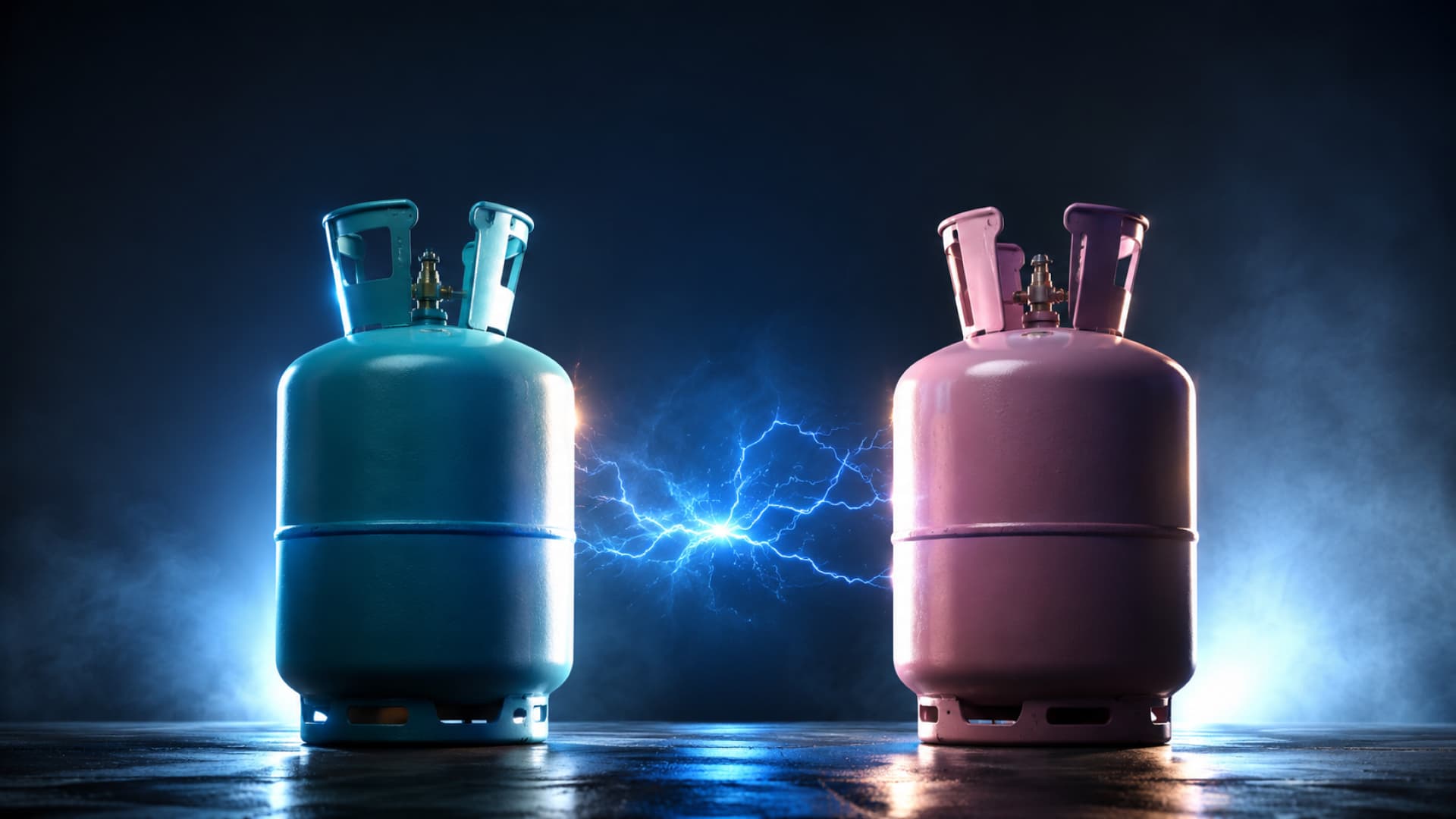
R-32 vs R-410A Aircon Refrigerant
R-32 and R-410A are refrigerants used inside air conditioners to move heat between the indoor and outdoor units. For a buyer, the practical difference is simple: R-32 is the newer, lower-GWP option used in many modern split aircons, while R-410A is an older refrigerant still found in many existing systems.
This quick guide explains what each refrigerant means, why R-32 is becoming more common, and what South African buyers should check before choosing a new aircon.
Help Article: R-32 vs R-410A Aircon Refrigerant
Short-form guide | 4 min read | Category: Product Help → Buying Guides
What Is Aircon Refrigerant?
Refrigerant is the fluid that allows an aircon to move heat. In cooling mode, the refrigerant absorbs heat from the indoor air and releases it outside. In heating mode, a reverse-cycle aircon can move heat in the opposite direction.
The refrigerant is not something the user should handle, top up, mix or replace. It sits inside a sealed system and should only be worked on by a qualified aircon technician.
If your aircon is short of refrigerant, the correct fix is not simply to “add gas”. The technician needs to find out whether there is a leak, repair it if required, then recharge the system according to the manufacturer’s specification.
What Is R-32?
R-32 is a modern aircon refrigerant used in many newer wall-split and inverter air conditioners. It has zero ozone depletion potential and a lower global warming potential than R-410A when compared using commonly referenced 100-year GWP values.
For buyers, R-32 usually matters for three reasons:
- It is used in many current-generation aircons.
- It has a lower environmental impact than R-410A if released.
- It can support efficient heat transfer when the aircon is designed for it.
R-32 is also a single-component refrigerant. That means it is not a blend in the same way R-410A is. From a service and recovery point of view, that can make it simpler to handle correctly, provided the technician is trained and the correct tools are used.
What Is R-410A?
R-410A is an HFC blend made from R-32 and R-125. It became common in split air conditioners after older ozone-depleting refrigerants were phased out.
R-410A also has zero ozone depletion potential, but its global warming potential is much higher than R-32. That is why newer aircon ranges have increasingly moved toward lower-GWP refrigerants.
This does not mean every R-410A aircon must be replaced immediately. Many existing R-410A units can still run well if they are correctly sized, properly installed and maintained. The refrigerant becomes more relevant when you are buying a new system, comparing long-term support, or facing a major repair on an older unit.
R-32 vs R-410A: Quick Comparison
| Feature | R-32 | R-410A |
|---|---|---|
| Refrigerant type | Single-component HFC | HFC blend |
| Common use | Newer split and inverter aircons | Older and existing split aircons |
| Ozone depletion potential | 0 | 0 |
| Global warming potential | 675 using common AR4 100-year values | 2,088 to 2,090 using common AR4 100-year values |
| Safety classification | A2L, lower toxicity and mildly flammable | A1, lower toxicity and no flame propagation |
| Can it be swapped into any aircon? | No | No |
| Best buyer takeaway | Prefer R-32 when buying a modern new aircon | Maintain existing R-410A units properly if still economical |
The key point is compatibility. You cannot convert a normal R-410A aircon to R-32 just because R-32 is newer. The compressor, coils, expansion device, pressure settings, refrigerant charge, safety requirements and manufacturer design all matter.
Is R-32 More Energy Efficient?
R-32 can support good energy efficiency, but the refrigerant alone does not determine your electricity bill.
Efficiency depends on the full system, including:
- The aircon’s inverter technology
- Correct BTU sizing
- Indoor and outdoor unit placement
- Clean filters and coils
- Good installation quality
- The temperature you set
- How long the unit runs each day
A modern R-32 inverter aircon will usually be a stronger long-term choice than an old, poorly maintained R-410A unit. But a correctly sized and well-maintained R-410A unit can still perform better than a wrongly sized R-32 unit.
Do not choose an aircon by refrigerant alone. Choose by room size, efficiency rating, noise level, warranty, brand support, installation quality and the way you will actually use the room.
Should You Choose R-32 When Buying a New Aircon?
Yes, if you are buying a new aircon and the right model is available, R-32 is usually the better future-facing choice. It is widely used in newer split aircon ranges and has a lower GWP than R-410A.
That said, the refrigerant should not override the basics. A buyer should still check:
- The correct BTU size for the room
- Whether the unit is inverter or non-inverter
- The energy efficiency rating
- Noise level for bedrooms and offices
- Warranty terms
- Installation requirements
- Availability of local support and spares
For most South African homes, the best aircon is a correctly sized inverter unit from a supported brand, installed properly by a qualified team. R-32 is a useful plus, not the only decision.
Should You Replace an R-410A Aircon?
You do not need to replace a working R-410A aircon just because it uses R-410A. Replacement becomes worth considering when the unit is old, inefficient, badly corroded, incorrectly sized, expensive to repair, or no longer supported with reliable spares.
Keep your R-410A unit if:
- It still cools and heats properly
- It is not leaking refrigerant
- It is serviced regularly
- Repair costs are reasonable
- It is correctly sized for the room
Consider replacing it if:
- It has repeated refrigerant leaks
- The compressor or major PCB has failed
- It uses a lot more electricity than expected
- It struggles to cool or heat despite servicing
- Spares are difficult or expensive to source
- You are upgrading the room and want a more efficient inverter unit
If you are unsure, ask a technician to diagnose the fault first. Then compare the likely repair cost against the price and efficiency benefit of a new aircon.
Refrigerant Safety: What Homeowners Should Know
R-32 is classified as mildly flammable, so it must be handled correctly. This does not make a properly installed R-32 aircon unsafe for normal home use, but it does mean refrigerant work must be done by trained technicians who understand the correct tools, ventilation, charging procedures and safety requirements.
Homeowners should never:
- Open refrigerant pipework
- Attempt a gas top-up
- Mix refrigerants
- Use an unqualified repairer
- Ignore signs of a refrigerant leak
- Keep running a unit that is icing up or not cooling properly
If your aircon is not cooling, forming ice, hissing, or repeatedly losing performance after a gas top-up, switch it off and book a proper inspection.
Internal Links
- Use the BTU Calculator
- What size aircon do I need?
- Aircon repair vs replace: how to decide
- How to reduce your aircon electricity use
- Browse Daikin aircons
- Browse air conditioners
FAQ: R-32 and R-410A Aircon Refrigerant
What is the difference between R-32 and R-410A?
R-32 is a newer single-component refrigerant with a lower global warming potential, while R-410A is an older blended refrigerant with a higher global warming potential. Both have zero ozone depletion potential, but R-32 is now common in many modern split aircons. The best choice for a new aircon is usually an R-32 model, provided the unit is correctly sized and properly installed.
Is R-32 better than R-410A?
R-32 is generally the better future-facing refrigerant because it has a much lower GWP than R-410A and is used in many newer aircon ranges. It can also support efficient aircon design. However, the full aircon still matters more than the refrigerant alone, so compare BTU size, inverter technology, energy rating, noise level, warranty and installation quality.
Can I replace R-410A with R-32 in my existing aircon?
No, you should not replace R-410A with R-32 in an aircon that was not designed for R-32. Aircons are engineered for a specific refrigerant, pressure range, oil compatibility and charge amount. Mixing or swapping refrigerants can damage the system and create a safety risk.
Is R-32 refrigerant safe for home air conditioners?
Yes, R-32 is safe for home air conditioners when the unit is designed for R-32 and installed and serviced by qualified technicians. It is classified as mildly flammable, which means refrigerant handling must follow the correct safety procedures. Homeowners should never attempt refrigerant work themselves.
Should I avoid buying an aircon with R-410A?
You do not automatically need to avoid R-410A, especially if you are maintaining an existing unit that still works well. For a new purchase, however, an R-32 aircon is usually the more modern and future-facing option. If two units are similar in price, sizing, efficiency and warranty, the R-32 model is usually the stronger choice.